
Kerala floods: UN report says Rs 310 billion needed to rebuild state
At Rs 100.46 billion, the highest amount would be needed for the reconstruction of roads and transportation
 "Kerala floods: UN report says Rs 310 billion needed to rebuild state")
Explore Business Standard

Associate Sponsors
Co-sponsor
At Rs 100.46 billion, the highest amount would be needed for the reconstruction of roads and transportation
Kerala will need about Rs 310 billion for recovery and reconstruction following the century's worst floods, according to a UN report presented to the Chief Minister by UN Resident Coordinator in India Yuri Afanasiev.
Afanasiev presented the Post Disaster Needs Assessment (PDNA) report to Chief Minister Pinarayi Vijayan here on Friday. This is the first time the UN has prepared such a report in India.
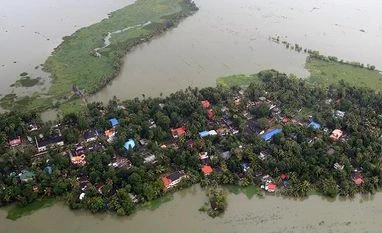
The report assessed the damage and loss incurred due to the devastating floods in the state in August. It said the state would need about Rs 310 billion for recovery and reconstruction.
The highest amount would be needed for the reconstruction of roads and transportation (Rs 100.46 billion), followed by housing (Rs 54.43 billion), agriculture, fisheries and livestock (Rs 44.98 billion), employment and livelihood (Rs 38.96 billion), other infrastructure (Rs 24.46 billion), irrigation (Rs 14.83 billion) and water and sanitation (Rs 13.31 billion).
The report highlighted the international examples and models for building back a better Kerala in 16 sectors.
It suggested that Kerala could become the first green state in the country by building on the four pillars of integrated water resources management; eco-sensitive and risk-informed approaches to land use and planning; inclusive and people-centred approaches; and by adopting knowledge, innovation and technology.
Chief Minister Vijayan thanked the UN for providing support to the state for flood response and developing the PDNA. He sought UN technical support in developing sectoral recovery plans, bringing international models and new technologies to Kerala and in strengthening the recovery committees with experts.
The Chief Minister sought UN support for mobilising resources for the state within and outside the country.
Kerala Finance Minister Thomas Issac thanked the UN for its assistance in mobilising grants for reconstruction. "This would reduce the amount of borrowing."
The PDNA is the global methodology developed by the UN, the World Bank and the European Union to assess damage and loss in the wake of disaster and to recommend the recovery needs and strategies.
In all, 76 experts from 10 UN agencies and EU across 13 sectors collaborated to develop the report in 20 days.
The UN agencies included UNDP, UNICEF, UNESCO, UN Women, UNFPA, UNEP, WHO, WFP, ILO and FAO and adopted reports of three sectors from World Bank and ADB.
Besides, two experts on integrated water resources management from the Netherlands also provided support.
The report was prepared after visiting 120 villages in 10 districts and interacting with experts, affected people, elected representatives, officials and representatives of civil society organisations.
First Published: Oct 26 2018 | 4:46 PM IST

