Lack of 'suitable' jobs holding back women employment
According to NSSO, employment surveys, women participation rates in India fell sharply after 2004-05
Ishan Bakshi New Delhi India ranks 120 among 131 countries on women labour participation, according to a report by International Labour Organization. Traditionally, this has been blamed on a culturally patriarchal society and rising family incomes that allow more women to stay at home.
A new paper by World Bank economists blames a "jobs deficit" for the decline in female labour force participation over the past decade. The study says a scarcity of "suitable job opportunities" outside farming and close to the place of residence are the main reasons why fewer women have joined the workforce.
This study has challenged the widely accepted narrative by India's policymakers and, if accepted, will have far-reaching ramifications.
According to National Sample Survey Office (NSSO), employment surveys, women participation rates in India fell sharply after 2004-05. Between 2004-05 and 2010-11, women labour participation in rural areas fell 12-14 percentage points.
To a large extent, this was because of a fall in agricultural employment. In the preceding five years (1999-00 to 2004-05), women participation had firmed up, increasing by roughly 14.6 million. Economists have argued this increase was in response to rural distress. Agricultural growth during these years had slowed to less than two per cent annually, putting pressure on farm incomes. This prompted women's entry into labour force, boosting household incomes. The situation reversed after 2004-05. The conventional explanation for reversal rests on the "income effect".
With rural incomes steadily increasing because of a combination of rising commodity prices and government support, female labour force participation fell sharply. Santosh Mehrotra, professor at Jawaharlal Nehru University, says, "with the rise of commercial agriculture and of household income (and fall in poverty rate), the opportunity cost of domestic activities for women increases, while that for paid labour of women decreases." Hence, women withdrew from the labour force in large numbers, a preferred choice in what is predominantly a patriarchal society.
If this explanation was sufficient, the decline in female participation would be higher in those areas where wage growth was fastest. According to the World Bank study, while data suggest such a relationship, the "income effect" explains only a part of the story. Part of the decline could also be because women are staying in educational institutions for a longer period. Also a partial explanation because labour force participation has dropped across all age cohorts. According to some studies, the decline in participation was highest in the age cohort 30-34 years, followed by 35-39 years. Thus, the argument that women are staying longer in schools is insufficient.
Other explanations by economists like Mehrotra are greater involvement in domestic duties and care work, poor skills training, lack of support for women entrepreneurs, occupational segregation and informality of work.
In the absence of a detailed analytical study, it has been difficult to gauge the actual impact of each of these factors. That's the question this study tried to address.

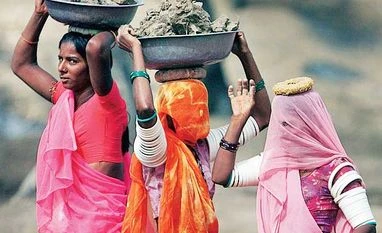 "Lack of 'suitable' jobs holding back women employment")


