A routine monthly report that tracks power supply in the country has embarrassed the government as it puts a question mark over its plan to make electricity available round the clock by March 2019.
Data from the National Load Despatch Centre, which monitors how India’s electricity grid is performing, shows that there is now a more than one per cent gap between the peak demand for power and what the power stations can supply. The gap was over 2,000 Mw on any given day in October, and has been widening since the beginning of this financial year.
This means that India may once again be heading for prolonged bouts of load shedding. “It is early days, but the trend is unidirectional,” said Deepak Agrawala, executive director (energy, industrials and infra) at Elara Capital. India has an installed capacity of 346,047 Mw of power, but usually utilises just about half of it. That picture began to change with the GDP climbing sharply in FY19. Data shows that peak demand for power rose from 161,811 Mw in April this year to 175,590 Mw in September — a spike of 8.5 per cent in just six months.
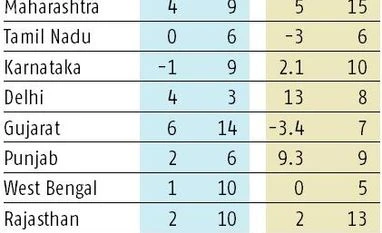
The rise in the consumption of electricity across states this financial year is in stark contrast to the flat or even dipping trends witnessed last year. States that consume large amounts of power such as Andhra Pradesh, Maharashtra, Gujarat, Tamil Nadu and Karnataka are consuming much more now.
As demand picks up in the economy, there is additional demand for power from industry as well. The price of electricity has risen in the spot markets to meet the rising demand from the states.
Another reason for the rise in the consumption of electricity from the grid is due to some improvement in the finances of the state electricity boards due to the partial success of the Uday scheme launched by the Centre. Under Uday, the boards can raise bonds to finance some of their receivables.
As per ministry of power data, till the end of September 2018 the boards have cumulatively raised Rs 2.32 trillion through this route from the markets, easing some of their financial strain.
Unfortunately, the pace of rise in the consumption of power in the large states far outstrips their ability to bring additional capacities to the system. And even if efforts were made to generate more power, it would be tough to do so without more coal. The existing plants too need more coal to work their turbines for longer durations.
The lack of adequate coal supply has, in fact, left the large thermal power plants hamstrung and unable to cash in on the sudden rise in demand. Of the top 10 power plants in the country, which account for 15 per cent of total electricity generation, only four have managed to significantly raise their plant load factor (PLF, which is the percentage of time a power plant is in operation.) The average PLF of these plants, hovering around 79 per cent in FY19, is lower than what it was last year. The main reason for that is the shortage of coal.
Agrawala says that out of 122 coal plants in the country, 29 had coal stock at critical levels (less than for seven days) by the end of October. Of these, 19 are operating with stocks for less than 4 days. The coal ministry is doing its bit to shore up the coal stock of power plants — it has diverted the fuel from other users such as the aluminium industry. Their demand for coal is about 188 MT per annum, or about 30 per cent of the total domestic coal production.
Partha Sarathi Bhattacharya, former chairman of Coal India Limited (CIL), puts the threat of additional load shedding to the coal shortage perpetuated by CIL’s monopoly position in the market “Even with a flat PLF, the illusory coal surplus situation of a couple of years ago has turned to one of shortage once again.” According to Bhattacharya, despite an expected 50 million tonne rise in coal production, FY19 will end with a larger shortage of coal for power plants, thereby increasing the chances of power cuts.

 "Lights out? More load shedding on the cards, suggests power supply report")











