Reserve Bank of India (RBI) Governor Shaktikanta Das said on Monday dealing with issues of liquidity was one of the central bank's biggest priorities. However, any infusion would be strictly based on the need to ensure that it was not seen as “easy money” by the markets.
This comes a day before Das meets the representatives of non-banking financial companies (NBFCs) in Mumbai.
Addressing a media briefing, Das did not rule out the central bank paying interim dividend to the Centre, but said no decision had been taken yet on the amount to be given.
“The situation is something the RBI is constantly monitoring and will take steps whenever a liquidity deficit is noticed. The RBI will not like a situation where liquidity becomes a kind of loose money. Any infusion of liquidity will have to be carefully considered and has to be need-based,” Das said. “Therefore, caution and care have to be exercised by the RBI so that excess liquidity, which sometimes has adverse consequences, is not created. I can mention that the liquidity needs of the economy are regularly monitored and the required steps will be taken,” he added.
Das added currently there wasn’t a liquidity crunch.
“I am looking forward to our interaction with the NBFCs and understand their perspective on various issues. The liquidity issue has been mentioned time and again. I have got several inputs over the past one month. I have had interactions with several stakeholders and we have a sense of the current liquidity situation,” Das said.
“We have announced additional open market operations (OMOs) of Rs 60,000 crore. Another Rs 10,000 crore was increased in December and for January, we have announced Rs 50,000 crore. We believe that the liquidity requirement of the economy and the financial institutions are met to a great extent,” he added.
When asked about conversations between the finance ministry and the RBI regarding the former's demand for an interim dividend, the governor said: “A lot of correspondence goes on between the government and the RBI. A lot of discussions take place; whether there is an individual letter or not is not relevant. As and when the RBI takes any decision on any matter, you will come to know about it.”
As reported earlier, the government is asking the RBI for at least Rs 10,000 crore in interim dividend for 2018-19 - the same amount in interim surplus that it received in 2017-18. The Centre is trying to meet a tough fiscal deficit target in the face of a possible shortfall in the goods and service tax collection and additional expenditure commitments.

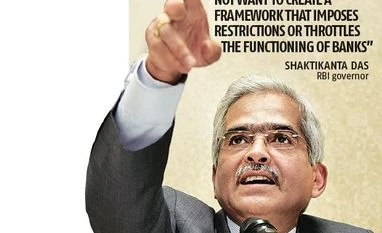 "Liquidity infusion will not be 'easy money': RBI Governor Shaktikanta Das")











