Looking beyond the feral violence in Northeast Delhi: Riots, really?

Sociologically speaking, the incidents of vandalism in Delhi do not qualify to be called riots. Ramanuj Ganguly dissects the causes, effects and projections of the violence

Delhi Violence
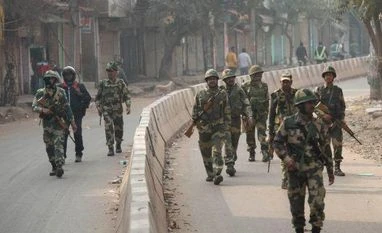
Security personnel patrol streets following clashes over the new citizenship law, in Yamuna Vihar. PTI
Ramanuj Ganguly
4 min read Last Updated : Mar 06 2020 | 2:46 PM IST

Don't want to miss the best from Business Standard?

A poverty of understanding and paucity of vocabulary have led to the recent feral violence in Northeast Delhi being labelled 'riots' in media and popular discourses, fomenting misinformation and, more importantly, misdirection.

Sociologically speaking, the incidents of vandalism in Delhi do not qualify to be seen as reflection of a broken society, or economic or geographical matters. Rather, reports of these incidents reflect a premeditated, organised and controlled violence by certain groups of people with significant personal stake in a cause they are unable to further with their intellectual and political capacity. Therefore, they are orchestrating lawlessness to instil fear, lay the foundation for greater harm in future, polarise the opponents, and dilute the seemingly unstoppable independent voices.

A brief survey of available reports in public space, placed chronologically, reflects that a group of young male unleashed violence, vandalism and destruction — not looting, though — typically in residential areas that were relatively marginalised socially, economically and politically, and were populated mostly by a single community. The places and property that were targeted indicate there was absence of impulsive and passionate rash of violence, vandalism or looting being perpetrated by all. There were no local incentives from the affected area or property to have led to the disorder and violence. Nor was there a destabilisation of or imbalance in communal equilibrium due to events particular to those affected areas. And no incidents took place as a reaction to a seeming grievance or for venting out dissent.

Just the way one cannot say that the protest and demonstrations in Delhi — popularly identified as ‘Shaheen Bagh’ — cannot be strictly termed as civil unrest by definition of the term, the Northeast Delhi violence cannot be called riots. Ample indicators show there has not been any communal rupture, as people from both communities helped save each other. They successfully contained the outbreak of a communal riot throughout Delhi by not getting seized by the crowd mentality and participating in mindless violence and the destruction of private and public property. Since the grip of the social and the sense of the community prevailed, there was no uniform contamination, and people did not feel anonymous enough to wreak violence freely without bringing consequences upon themselves.

Interestingly, if we look at the media coverage of the events and the official statements and reactions, it becomes clear that the recent violence in Delhi has been portrayed in a particular way which may seem to many as planned — the identity and locational origins of the vandals are yet not clear or made unequivocally public. Only one political person, his premises, and people on the roof throwing hand-made missiles of various types are portrayed.

The presence of hand-made missiles has been cited as premeditation, but running amok brandishing revolvers on the streets of Delhi does not call for such labelling. No political party seems to care to interpret and understand the incidents; they are more engaged with politicking for merely some brownie bites on electronic media. A multifactorial outlook on these incidents helps one realise that those who participated had ‘in-order-to-motive’, whereas post facto reactions and official reparations were of ‘neutralisation-motive’. And there is a disjunction in the two perspectives.

We are focusing to find justification at the level of meaning — the making of the incidents, rather than looking for explanation at the level of causality. This has resulted in a scenario where the collective meaning-making process is taking us away from looking at the process by which political groups make riots look abrupt. History tells us that riots in general have been extremely seductive and beneficial for political parties of every hue and ideology, and also for personalities and interest groups in the political arena. The instrumentality of human harm caused by communal violence in India has always paid dividends to some political party or other since early 20th century. However, it is the projected expressive purposes of such violence that have carried the day and lived in the popular memory, reinforcing the collective fear and apprehension lurking beneath the surface that can be tapped anytime.

We will do well to stop looking at the recent violence of Northeast Delhi under the prism of ‘popular venting of residual rage’ due to deprivation, marginalisation, poverty, inequality and rising awareness about inequalities. We have observed often in our country that people do lead their lives peacefully even under most dispossessed circumstances, whereas people in relative ease and privilege often suffer from deviance and violence. Rather, it is the craftiness of the propagation of these incidents that ought to get our attention. Else, by the time we get alert about the perversity of the situation, we will not live to counter them.


Dr Ramanuj Ganguly is the Professor of Sociology at West Bengal State University, Kolkata

One subscription. Two world-class reads.

Already subscribed? Log in

Subscribe to read the full story →
*Subscribe to Business Standard digital and get complimentary access to The New York Times

Smart Quarterly

₹900

3 Months

₹300/Month

SAVE 25%

Smart Essential

₹2,700

1 Year

₹225/Month

SAVE 46%
*Complimentary New York Times access for the 2nd year will be given after 12 months

Super Saver

₹3,900

2 Years

₹162/Month

Subscribe

Renews automatically, cancel anytime

Here’s what’s included in our digital subscription plans

Exclusive premium stories online

  • Over 30 premium stories daily, handpicked by our editors

Complimentary Access to The New York Times

  • News, Games, Cooking, Audio, Wirecutter & The Athletic

Business Standard Epaper

  • Digital replica of our daily newspaper — with options to read, save, and share

Curated Newsletters

  • Insights on markets, finance, politics, tech, and more delivered to your inbox

Market Analysis & Investment Insights

  • In-depth market analysis & insights with access to The Smart Investor

Archives

  • Repository of articles and publications dating back to 1997

Ad-free Reading

  • Uninterrupted reading experience with no advertisements

Seamless Access Across All Devices

  • Access Business Standard across devices — mobile, tablet, or PC, via web or app

Topics :Citizenship BillDelhi Riots 2020Citizenship Act

Next Story