
Macro-economic instability was highest under UPA govt: Surjit Bhalla
The report compares growth rates between old series (2004-05) and new series based on 2011-12 prices
 "Macro-economic instability was highest under UPA govt: Surjit Bhalla")
WebinarsNew
Deep DiveNew
Explore Business Standard
The report compares growth rates between old series (2004-05) and new series based on 2011-12 prices
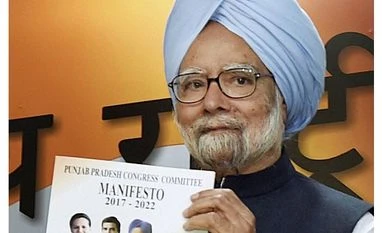
New GDP data does not change the reality that 'macro-economic instability' was highest under the previous UPA government period, Economic Advisory Council to the Prime Minister (EAC-PM) member Surjit Bhalla said on Saturday.
According to the back series data prepared by the by the Committee on Real Sector Statistics, constituted by the National Statistical Commission,
Indian economy clocked a 10.08 per cent growth rate in 2006-07 under the then Prime Minister Manmohan Singh, the highest since the liberalisation of the economy in 1991.
"Rumour going around that UPA had higher growth; therefore no policy paralysis; "new" GDP data does not change the reality that macro-economic INSTABILITY was highest under UPA-highest inflation ever, highest center + state fiscal deficits, highest corruption & highest policy paralysis," Bhalla said in a tweet.
The report has been released on the website of the Ministry of Statistics and Programme Implementation (MOSPI).
The report compares growth rates between old series (2004-05) and new series based on 2011-12 prices.
According to the old series (2004-05), the expansion in the Gross Domestic Product (GDP) at constant prices was 9.57 per cent during 2006-07, when Manmohan Singh was prime minister. As per the new series (2011-12), the growth number stands revised at 10.08 per cent.
This is the highest growth rate recorded by the country after the economic liberalisation programme launched by the then Prime Minister P V Narasimha Rao.
"The GDP back-series data is finally out. It proves that like-for-like, the economy under both UPA terms (10-year avg: 8.1 per cent) outperformed the Modi Govt (Avg 7.3 per cent)," the Congress party had said in a tweet yesterday.
"The UPA also delivered the ONLY instance of double-digit annual growth in modern Indian history," it had said.
The GDP numbers for the later years too have been revised upwards, according to the report.
The National Statistics Commission had set up the committee to recommend suitable measures to strengthen systems and processes for collection, collation and dissemination of these statistics with the possibility for improving timeliness.
First Published: Aug 18 2018 | 6:45 PM IST


 Connect with us on WhatsApp