
Maharashtra Budget session: Govt announces measures to ease farmers' woes
A record 3,052 farmers committed suicide in Calendar 2016
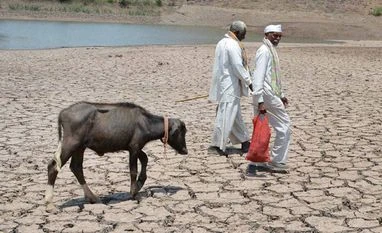 "Maharashtra Budget session: Govt announces measures to ease farmers' woes")
premium
Explore Business Standard

Associate Sponsors
Co-sponsor
A record 3,052 farmers committed suicide in Calendar 2016
The BJP-led government in Maharashtra on Monday announced a slew of decisions to mitigate agrarian distress and to boost the flow of investments in order to maintain its pre-eminence as the favoured destination.
The farmer-friendly measures include sustainable development schemes, marketing support, crop insurance, water conservation, irrigation and agricultural diversification. The government hopes that these steps will help double farmers' income during the next five years.
State Governor C Vidyasagar Rao made these announcements in his address during the joint session of the state legislature.
The timing of these announcements is crucial when the chorus for farm loan waiver is increasing. The state relief and rehabilitation department in its report revealed that a record 3,052 farmers suicides took place during January-December 2016.
Further, the Governor said the government will introduce a project for climate resilient agriculture and the World Bank assisted scheme entailing an investment of Rs 4,000 crore is being rolled out to ensure drought proofing of 4000 villages of Vidarbha and Marathwada. The project aims to mitigate the soil and ground water salinity problem in 1000 villages of Purna river basis in Vidarbha region where the number of farmers suicides are high.
More than 250,000 works were completed and 1.2 million thousand cubic meters of water storage potential was created under the Jalyukta Shivar Abhiyan (water conservation scheme) which was launched in December 2014. Nearly 11,000 villagtes have been made drought-proof by conserving water in village watersheds.
On attracting investments, the Governor said Maharashtra continues to top the list as its share in total foreign direct investment inflow in India during the past six months has risen to 50 per cent. Further, the Maharashtra Industry, Trade and Investment Facilitation Cell (MAITRI), which acts as a single window for 44 industrial clearances required across 18 departments, has so far facilitated unlocking investment of over Rs 85,000 crore and employment potential of 155,000. The government has reduced number of approvals to 47 from 74 for ease of doing business and implemented several reforms to make the administrative process industry and investor friendly.
On infrastructure development, the government will build the Mumbai Nagpur super communication expressway at an estimated cost of Rs 46,000 crore. The government has approved capacity augmentation of Pune-Mubai expressway to remove congestion at a cost of Rs 3,215 crore. This apart, about 3,600 km of state highways will be upgraded to national highways by May 2019 at an investment of Rs 24,000 crore.
As far as transportation infrastructure in Mumbai is concerned, the works of Mumbai Metro 3, Mumbai Metro line 2A, Mumbai Metro line 7 have already started and the Navi Mumbai metro is expected to be complete by 2018. The state government has inked a joint venture agreement with the Ministry of Railways to set up Maharashtra Railway Infrastructure Development Company to put implementation of railway projects on fast track.
Already subscribed? Log in
Subscribe to read the full story →

3 Months
₹300/Month
1 Year
₹225/Month
2 Years
₹162/Month
Renews automatically, cancel anytime

Over 30 premium stories daily, handpicked by our editors


News, Games, Cooking, Audio, Wirecutter & The Athletic
Digital replica of our daily newspaper — with options to read, save, and share


Insights on markets, finance, politics, tech, and more delivered to your inbox
In-depth market analysis & insights with access to The Smart Investor


Repository of articles and publications dating back to 1997
Uninterrupted reading experience with no advertisements


Access Business Standard across devices — mobile, tablet, or PC, via web or app
First Published: Mar 06 2017 | 11:14 PM IST

