Fearing more exodus of high-paying industry consumers opting for the open access clause, the government of Maharashtra is mulling a levy on such transactions.
The government fears a big hit on finances of the Maharashtra State Electricity Distribution Company, referred to as MahaVitaran.
Read more from our special coverage on "MAHARASHTRA"
Open access allows large users of power — typically having a connected load of 1 megawatt and above — to buy cheaper power from the open market. The idea is to allow customers to choose among a large number of competitors instead of being forced to buy from the (usually state-run) electric utility monopoly. The (national) Electricity Act of 2003 had enabled this, though states have resisted its enforcement.
Already, 1,200-1,400 Mw is being drawn under open access in the state, worth Rs 1,200 crore.
Of MahaVitaran's 25 million consumers, 346,900 are from industry and pay the highest highest rate. This payment cross-subsidises Rs 10,000 crore annually for the lower rates charged for agriculture and power looms. Of the state's daily power demand of 16,000 Mw, industry consumers need 6,500-7,000 Mw.
MahaVitaran charges industry consumers Rs 8.23 a unit, compared with Rs 6.8 in Karnataka, Rs 6.35 in Gujarat, Rs 6.6 in Andhra, Rs 6.9 in Madhya Pradesh, Rs 5.75 in Chhattisgarh and Rs 5.10 in Goa. The power purchased through open access is cheaper by at least Rs 1.50 a unit.
Energy Minister Chandrashekhar Bawankule told this newspaper: “The introduction of ED (electricity duty) on open access transactions is under consideration. It will be possible through amendments to the Maharashtra Electricity Duty Act. MahaVitaran's interests will be protected through the move.''
Kameswara Rao, partner at Price Waterhouse, said: ''Restricting open access is counterproductive, and states must realise they are hurting chances of growing investment, employment, and tax revenues. In contrast, some states are offering unfettered open access to attract industrial investment and economic activity.''
Jayant Deo, former member, Maharashtra Electricity Regulatory Commission, said: “The falling sales tax revenue, decreasing employment and falling electricity consumption by industries in Maharashtra for three years are signs of lack of understanding. It is equal to killing the hen that gives a daily egg.''

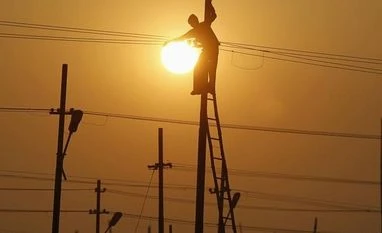 "Maharashtra for levy on open access power purchase")


 Connect with us on WhatsApp