The power supply of greenfield airport at Jharsuguda, which Prime Minister Narendra Modi inaugurated last Saturday, is funded by proceeds from the District Mineral Foundation (DMF). A sum of Rs 132 million has been provided for the airport's power supply - this is four times the allocations made to address nutrition and development issues in the district.
The misplaced focus in spending DMF funds presents a sombre picture. In Jharsuguda, the under-five mortality rate (U5MR) is 53 per 1,000 live births, while 38 per cent of the children under five is stunted. But Jharsuguda isn't an aberration.
A study by the NGO Centre for Science & Environment throws up some disturbing findings. In Sundargarh, one of Odisha's top mining districts, a paltry Rs 30 million, out of the district's total sanction of Rs 7.45 billion, has been earmarked for child development. In Sundargarh too, the U5MR is high at 67 and nearly 50 per cent of the students are stunted. In Keonjhar, another prolific mining district, 96 per cent of the Rs 3.83 billion health sanctions is set aside for construction of a medical college.
"The trends prove that DMF is deviating from its people-centric objective and is failing to serve the intended beneficiaries. Both in terms of administration and fund use, it is increasingly becoming indistinguishable from any other general development fund. The most problematic aspect is that some of these are also going against the spirit of the legal provisions guiding DMF," the report observed.
Odisha boasts of the highest collections under the DMF. At the end of March 2018, the cumulative contributions to the state's DMF stood at Rs 44.53 billion- this is 24.75 per cent of the nationwide collection of Rs 179.91 billion. Most of the DMF investments have been parked in areas which do not benefit the people affected by mining. The CSE study establishes that less than two per cent of Odisha's DMF sanctions has gone into women and child development, a critical area impacting most mining districts. Physical infrastructure is the top focus area, it has absorbed 34 per cent of the sanctioned DMF funds. Drinking water supply (25.2 per cent), healthcare (17.7 per cent) and education (10.5 per cent) form the other important sectors.
DMF are trusts set up in the districts affected by mining, meant to be used for the welfare of the local population. Mining firms contribute to these non-profit bodies.
The sanctions in all the districts clearly show the lack of a systematic planning approach prioritizing the need of mining-affected people and taking into account the ground realities. Ironically, even after being the richest state in terms of receiving Compensatory Afforestation Fund Management and Planning Authority (CAMPA) funding, districts in Odisha also sanctioned a total of Rs 94 million for afforestation from DMF funds. Between 2012-13 and 2016-17, Rs 13.75 billion of CAMPA funds have been released into the state.
An Odisha government official, however, said the emphasis of DMF funds was on core infrastructure and health allocations.
"Such projects will benefit the mining affected people in the near future. Women and children are already profiting from many schemes of the state financed by its Budget," the official said.
Project Monitoring Units (PMUs) have been established in the state's top five mining districts- Keonjhar, Sundargarh, Angul, Jharsuguda and Jajpur. These PMUs are being managed by top consultants like EY and PricewaterhouseCoopers (PwC). There is no dedicated office yet though one official has been identified as the DMF in-charge in Sundargarh district.

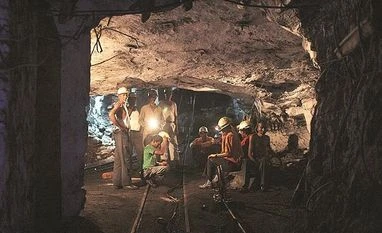 "Misplaced priorities? DMF funds in Odisha fail to benefit mining-affected")












 Connect with us on WhatsApp