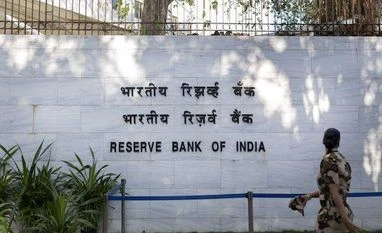
Economists and bond market participants are certain of a monetary policy pause on April 7, and possibly for the rest of the calendar year.
This is owing to renewed surge of the Covid pandemic, which is likely to hit the growth momentum to some extent.
The Reserve Bank of India (RBI) has often repeated that the accommodative stance would continue for as long as necessary, and well into fiscal year 2021-22.
Also, a data-dependent monetary policy committee (MPC) would unlikely change either its stance or rate decision in the absence of strong data. And therefore, other than liquidity measures, the policy could largely be a continuation of assurances to the bond market about ample liquidity.
The policy, being the first in the fiscal year, could have many important policy measures spelled out. However, a status quo on rates and stance was expected by all 10 economists and market experts that Business Standard polled.
The policy would also be the first for the MPC after review of the inflation mandate. The mandate remains the same, which means policy continuity.
Despite resurgence of the pandemic, and lockdown fears, RBI governor Shaktikanta Das recently said the growth projection would likely not be revised down from 10.5 per cent, as was projected by the central bank earlier.
Meanwhile, inflation has perked up but is well within the target range. Consumer price index (CPI)-based inflation rose to 5 per cent in February from 4.1 per cent in January due to food and fuel prices, which increased to 3.87 per cent and 3.53 per cent, respectively.
There would be a hold on policy rate actions, while the stance would remain accommodative, said Saugata Bhattacharya, chief economist of Axis Bank.
“Outlook on upside risks on inflation will likely harden, although not as much as we thought before the pandemic surge. However, the possibility of normalisation in the June policy looks remote now,” said Bhattacharya. Normalisation could start coming from August, or even get pushed to October, he said.
The rates and stance would likely remain unchanged for “several months despite a gradual build-up in inflationary pressures,” said Siddhartha Sanyal, chief economist at Bandhan Bank.
“Against the backdrop of a large government borrowing and renewed uncertainties with a fresh surge in Covid infections, a key challenge for the RBI is to maintain orderly conditions in the financial markets. Given only the nascent stage of growth recovery, anchoring interest rates is critical; it is heartening that policymakers appear committed to doing so,” said Sanyal.
Shubhada Rao, founder, QuantEco Research, said the potential risk of a full-blown second wave “may upset many calculations.”
“While some measures to suck out excess liquidity glut are under way, we expect the RBI to stay put on rates up to Q3 of FY22. While a better-than-anticipated progress has been made on the vaccine front, the virus, too, has made a strong comeback. Growth recovery for FY22 will be marked by an element of choppiness in business activity, especially services, many of which had resumed operations not too long ago. As such, the RBI may yet lean on growth recovery as a primary focus,” Rao said.
The bond market is not expecting any change in rate or stance either, but “slowly pencilling in slow hikes in the second half of fiscal as GDP powers up unless Covid plays spoilsport,” said Harihar Krishnamoorthy, head of treasury at First Rand Bank.
“The sudden sharp rise in Covid cases would probably give the MPC space to ignore the sharp rise in GDP and associated data,” Krishnamoorthy said.
“The RBI will continue to give assurances that it would stay accommodative indefinitely, as the second wave of Covid has again made the economic growth outlook uncertain. Also, the RBI is responsible for the smooth sailing of the government borrowings programme,” said Rupa Rege-Nitsure, chief economist of L&T Finance Group.
The assurance by the RBI to ensure smooth government borrowings should deter it from any change, said Upasna Bhardwaj, senior economist at Kotak Mahindra Bank.
Given that average inflation is expected to remain above 4 per cent in this fiscal year, an extended pause for the repo rate through 2021 is called for, said Aditi Nayar, principal economist at ICRA Ratings.
“Inflation threat is real with core inflation rising,” said Madan Sabnavis, chief economist at CARE Ratings.
According to Rajni Thakur, Economist, RBL Bank, “The second wave of the pandemic since its last statement gives another reason to lean towards growth until broad-based growth revival is entrenched. Any discomfort from hardening core inflation levels since then will likely be overlooked for now in favour of growth supportive stance. With the global yields tightening, however, the communication around policy normalization timelines will be the key signal for the markets."