Montek says poverty estimate calculation not multi-dimensional
Says factors like clean water, sanitation etc should also be taken into account
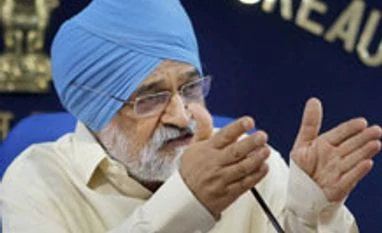
BS ReporterAgencies New Delhi Planning Commission deputy chairman Montek Singh Ahluwalia on Monday said poverty estimates should not just be based on consumption expenditure alone, as is the current practice, but should be multi-dimensional.
“We have said deprivation cannot be analysed by just consumption expenditure, but factors like clean water, sanitation etc should also be taken into account,” Ahluwalia said.
Speaking to reporters for the first time after the controversy broke out over the low poverty line pegged by the commission recently, Ahluwalia said the latest estimates only show that poverty has not been eliminated and a large number of people are still in abject poverty, but the rate of people coming out of poverty has accelerated.
On the need for estimating poverty based on the Suresh Tendulkar panel’s recommendations when it itself junked the formula almost a year before, Ahluwalia said there was a need to re-estimate poverty based on the old formula after the new data sets were available from the National Sample Survey Office. “It would have been absurd for us not showing what the Tendulkar line was in 2011-12,” Ahluwalia said.
He said even if someone challenges the faster reduction in the percentage of people living below the poverty line between 2004-05 and 2011-12 than the previous decade, the fact that in actual numbers, more people were brought out of poverty in the same period, could not be discounted.
The Planning Commission’s latest poverty estimates, based on the 2011-12 consumption expenditure survey, shows that across India, the number of people living below the poverty line declined by more than 15 percentage points - from 2004-05 to 2011-12 and from 37 per cent to 21.9 per cent. It shows that between 1993-94 and 2004-05, the average annual decline in poverty was 0.7 per cent, while between 2004-05 and 2011-2012, it was over two per cent. The estimates are based on the assumption that any person spending more than Rs 33.3 in urban areas a day and Rs 27.2 per cent in rural areas is not poor.
The Commission used the Tendulkar committee’s methodology, which factors in spending on health and education, besides calorie intake, to arrive at a poverty line for cities and villages.
Ahluwalia said the poverty line does not define the aam aadmi but those who are even below that level. “This is not the Planning Commission's (poverty) line. Poverty line is not drawn by the Planning Commission. It is drawn by an expert group. The line you are talking about is a line recommended by the Suresh Tendulkar expert committee.”
Ahluwalia said since the poverty reduction rate during the United Progressive Alliance (UPA)’s time was three times higher than before, the numbers came under attack from various political parties. “This conclusion that during the UPA period, we did a much better job on poverty than in the previous period — this is the main point that is coming out. That is why, politically, it is being attacked,” he said.

 "Montek says poverty estimate calculation not multi-dimensional")


 Connect with us on WhatsApp