The number of centrally sponsored schemes (CSS) is likely to be reduced from the current 72 to about 30, with a sub-group of chief ministers, constituted under the NITI Aayog, appearing to be reaching a broad consensus on this issue. Also, more flexibility might be given to states in running these schemes.
A cut in the number of CSS would be the first major decision of a panel under the Aayog, constituted to boost cooperative federalism.
A consensus on the funding pattern of these schemes has, however, remained elusive, with the northeastern states and Jammu & Kashmir differing over the proposed changes in this regard at a meeting of the sub-panel in the Aayog on Saturday. These states want the Centre to bear the entire burden of these schemes, at least for a decade. As such, these might not agree to a yet-to-be prepared report on the funding pattern.
An official said Arunachal Pradesh opposed any cut in the Centre’s 100 per cent contribution to CSS. “Northeastern states said given their peculiar geographical location, low development and lack of industries, the central government should bear the full burden of CSS for at least 10 years,” the official said.
Kerala has made a strong pitch for a higher share of the Centre in CSS, which it said should be 75 per cent. Speaking at the Aayog, Kerala Chief Minister Oommen Chandy said the allocation of Rs 1.69 lakh crore for CSS this year was inadequate, considering the demand presented by the national development agenda.
Following the 14th Finance Commission’s recommendation to increase the share of states from 32 per cent to 42 per cent of the Centre’s divisible tax pool, the finance ministry had changed the funding pattern in Budget 2015-16, though the number of schemes remained 72. It had de-lined 12 schemes, including one for modernisation of police and other forces, from central funding.
Saturday’s meeting could be the last of the chief ministers’ sub-panel. Next month, officials might meet to give final touches to the report.
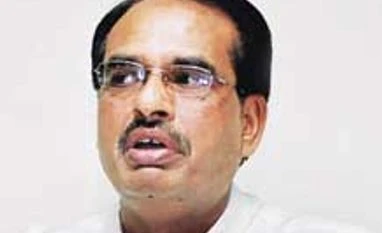
At Saturday’s meeting, Madhya Pradesh Chief Minister Shivraj Singh Chouhan, convenor of the panel, tried to evolve a consensus over the funding pattern. He sought to convince the members that the committee was doing its best to ensure no one felt left out, given the limited resources at the disposal of both the central and state governments.
He assured states the Centre would take full care of northeastern states, as well as Jammu & Kashmir.
| DRAFT REPORT SAYS |
- Number of CSS to be brought down to 30 from the current 72
- Central share in no scheme to be less than 50%
- All CSS to be divided into two categories— core schemes and optional schemes
- In core schemes, central share will be in the ratio of 60:40 and in the option schemes, it would be 50:50
- For special-category states in the first category, funding pattern will be 90:10 and in the second category, it will be 80:20
- The component of flexi-fund would be raised from the current 10% to 25%
- The revamped CSS is set to be implemented from 2015-16
- The change will be reflected in the supplementary Budget for 2015-16
|
“There is a broad consensus on reducing the number of CSS,” Chouhan said after the meeting. He added as there were more suggestions, he had formed a committee of NITI Aayog officials, headed by its chief executive, Sindhushree Khullar.
“It (the committee) will deliberate...prepare a final draft by July 5. After seeking all chief ministers’ consent on the draft, the final recommendations will be submitted to the prime minister,” he added.
Based on earlier meetings, a draft report was presented to the members on Saturday for comment.
Officials said the panel of chief ministers had recommended the component of flexi-funds in each scheme be raised from the current 10 per cent to 25 per cent to enable state governments to have greater say in spending funds allocated by the central government.
The draft report also suggested CSS be divided into two broad groups: The first, core schemes, will comprise national development agenda, including schemes such as the Mahatma Gandgi National Rural Employment Guarantee Scheme, the Swachh Bharat Mission and the mid-day meal programme.
The second group, optional schemes, will account for social protection and social inclusion.
Based on the division of schemes into two parts, the number of CSS would be 30, the draft stated.
In each of the identified core schemes, ordinarily, the Centre will implement an umbrella programme, with a large number of components having a uniform funding pattern to suit states’ requirements. For general-category states, under core schemes, the Centre and states would share the funding in the ration 60:40.
However, the pattern for schemes in which the Centre’s share is below 60 per cent will remain unchanged.
Under optional schemes, the funding will be shared equally for general-category states. But for schemes in which Centre’s share is below 50 per cent, it will remain unchanged.
For 11 special-category states, the Centre and states will share the funding in the ratio 90:10 for core sector schemes, while for optional schemes, it would 80:20.
The draft report also said for CSS projects in which 30 per cent of the work had been completed, the funding should be continued. The sharing pattern under which projects were approved should also continue till March 2017, it added. If the projects are incomplete thereafter, a state would have to complete it with its own funds.
The draft report says schemes addressing poverty elimination, drinking water, Swachh Bharat, rural electrification, women and child health nutrition, housing, urban transformation, etc, should be given priority.
According to the draft, the rationalisation of schemes and the restructured funding pattern for CSS should be implemented from 2016-17.

 "More flexibility may be given to states in running CSS")


 Connect with us on WhatsApp