Indian government’s move to ban wheat exports to curb may prove to be counter-productive, according to a report by Nomura, which suggests that the export ban should exert upward pressure on global wheat prices, which were already rising for other reasons, such as higher energy costs initially, and the Russia-Ukraine war later, and have risen further in anticipation of this ban.
“The impact of the wheat export ban on India’s domestic food inflation is likely to be muted. This export ban is a pre-emptive step and may prevent local wheat prices from rising substantially; however, with domestic wheat production likely limited by the heatwave, local wheat prices may not moderate materially. If India’s wheat ban leads to higher price of substitutes like rice, then there could be upward pressure on other food prices,” wrote Sonal Varma, chief economist for India and Asia ex-Japan at Nomura in a recent co-authored note with Aurodeep Nandi.
India officially banned durum wheat exports, moving it into the ‘prohibited’ category with effect from May 13. Shipments will be allowed where irrevocable letters of credit (LOC) have been issued before the notification date. However, the government is open to allowing exports to neighboring and other vulnerable developing countries for their food security needs, but a separate request will need to be submitted by their respective governments.
The move to ban the export of wheat was prompted by rising inflation, (WPI) in India has moved up from 2.26 per cent at the start of 2022 to 14.55 now. Retail inflation, too, hit an eight-year high of 7.79 per cent in April, driven by rising food and fuel prices.
That said, the duration of India’s export ban is indefinite as of now. The government’s notification, according to reports, does not provide for a domestic wheat price target level or local stock availability that would result in a revocation of the ban.
Earlier, India had banned wheat exports in February 2007 and maintained a status quo for over four years before lifting it in September 2011, due to record output and to free up storage space. A pre-condition, however, was that exports would not exceed two million tonnes. A ban on rice (non-Basmati) exports imposed in October 2007 was lifted temporarily before being reintroduced in April 2008, and then removed only in September 2011.

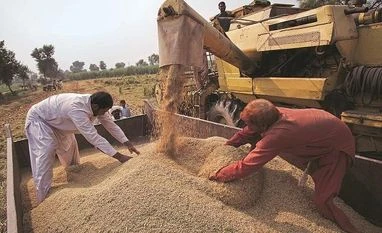 "Muted impact of wheat export ban on India's domestic food inflation: Nomura")











