
NABARD lays emphasis on farmer producer organisation: official
NABARD believes the strategy of achieving higher growth in agriculture needs to be based on forming new farmer producer organisations (FPOs) and nurturing the existing ones
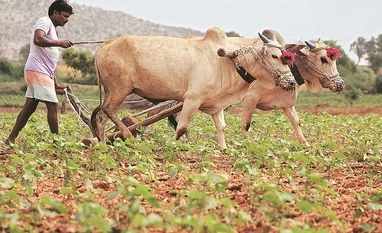 "NABARD lays emphasis on farmer producer organisation: official")
Explore Business Standard

Associate Sponsors
Co-sponsor
NABARD believes the strategy of achieving higher growth in agriculture needs to be based on forming new farmer producer organisations (FPOs) and nurturing the existing ones
NABARD has said the strategy of achieving higher growth in agriculture needs to be based on forming new farmer producer organisations (FPOs) and nurturing the existing ones, an official said on Wednesday.
As of January 2021, about 8,500 FPOs have been promoted in the country by various agencies with 4,868 of them by NABARD alone, its chairman Dr G R Chintala told reporters at the Tamil Nadu Agricultural University (TNAU) here.
Keeping in mind that there must also be a concurrent evaluation of whether some course correction was required, NABARD conducted an internal study on FPOs in Kerala, Madhya Pradesh, Odisha and Rajasthan covering 1,886 farmers having membership in 39 FPOs and 971 farmers without any membership, he said.
Farmers reported receiving a higher average price for their produce after obtaining membership in FPOs besides an increase on income by 13.35 per cent to 25 per cent, Chintala said.
He said the findings may be useful for drawing the future actionplan related to FPOs.
Stating that cooperative institutions were yet to realise their potential, NABARD has been taking initiatives like transforming the Primary Agricultural Centres (PACs) as multi-service centres in a phased manner spanning over three years from this financial year to develop them as a one-stop shop to support farmers on post-harvest and marketing activities, he said.
On the cards was the computerisation of PACs for revival of the short-term cooperative credit structure, he said.
On the three farm laws introduced by the Centre that resulted in protests from ryots, Chintala said the matter was subjudice.
To a question on waiver of agricultural loans and its impact on rural bank sector and cooperatives banks, he said though it is good for the farmers, cooperative banks would not have much impact as the governments were repaying the loans.
First Published: Feb 10 2021 | 3:38 PM IST

