New licensing regime for UCBs on the cards after a 17-year standstill

What went unnoticed is that the RBI has been tightening the screws on UCBs for a while now
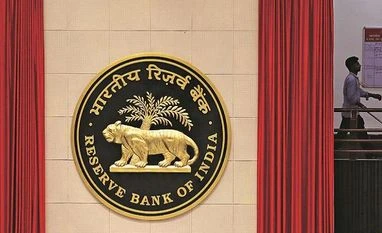
New licensing regime for UCBs on the cards after a 17-year standstill
The RBI has not spelt out clearly if the BoM is to mirror the provisions in sub-section 2 of section 10A in its entirely
BS Reporter
5 min read Last Updated : Dec 20 2021 | 6:10 AM IST
On June 25, the Reserve Bank of India (RBI) issued a circular which barred those holding political office, members of municipal corporations and other local bodies from being corner-room occupants, or whole-time directors (WTDs) in urban cooperative banks (UCBs). The circular was seen as overreach on the part of the central bank and synched along with the creation of the Ministry of Cooperation (MoC) — having been issued just 10 days prior. An otherwise well-intentioned measure became captive to politics, with some opposition parties on record saying that it is meant to clip their wings. Even if true, this should get a standing ovation!

Of woods and trees

What went unnoticed is that the RBI has been tightening the screws on UCBs for a while now. As far back as December 31, 2019, it said that UCBs with deposits of over Rs 100 crore are to set up a board of management (BoM) under the Board of Directors (BoD). And “The BoM will have specialists drawn from accountancy, agriculture and rural economy, banking, co-operation, economics, finance, law, small scale industry, and information technology”. The central bank’s notification did not mention this specifically, but it implied that the provisions in sub-section 2 of Section 10A of the Banking Regulation Act (BR Act: 1949) will come into play for UCBs.

The thinking behind this move was that under the extant legal framework, the BoD of UCBs perform both executive and supervisory roles — with the responsibility to oversee the functioning of the UCBs as a cooperative society as well as a bank. UCBs with deposits of  Rs 100 crore and above were advised to constitute a BoM to facilitate professional management and focussed attention on banking-related activities of UCBs and, thus, protect the interests of depositors.


At a time when the central bank has recast the way the boards function, nomination and remuneration committee and audit committee are drawn up at private banks, there is no reason why UCBs should not come under closer scrutiny. The blow-out at Punjab and Maharashtra Bank (a scheduled UCB), if anything, tells you that even an entity which is nowhere close to being systemically important can create havoc given the inter-connectedness in the wider financial system. That’s why the central bank’s move to align governance and prudential norm for banks — mainline, UCBs and non-banking financial companies (NBFCs). For instance, effective from the last fiscal, the prudential exposure limits for UCBs for a single borrower and a group of connected borrowers was reduced to 15 per cent and 25 per cent of their capital from 15 per cent and 40 per cent, respectively. A suitable glide path has been given to UCBs for bringing down their existing exposures within the aforesaid revised limits by March 31, 2023.

The latest set of consolidated numbers for UCBs (Report on the Trend and Progress of Banking in India for 2018-19)  says that those with deposit bases of up to Rs 10 crore formed the modal class in FY08, but the Rs 100 crore to  Rs 250-crore bracket became the modal class at the end of FY19. What this means is an increase in the average deposit per account as well as an expansion of the customer base of UCBs. This transition over a decade has come with its pains, and the fear is that an inability to set up a BoM can harm their business given the reputational risk involved. Factor in the fact that the distribution of moratorium sought by micro, small and medium-enterprise loan indicates that UCBs bore the brunt of incipient stress, followed by state-run banks and NBFCs, it becomes all the more critical to bring them under closer scrutiny. Plus, beginning FY05, UCBs have undergone 136 mergers till March 2020, with Maharashtra accounting for more than half of them. A lot many of these mergers were for all practical purposes shot-gun marriages.

The impractical

The RBI’s stance that UCBs with deposits of over  Rs 100 crore are to set up a BoM needs a revisit. In FY19, you had 647 UCBs that answered to such a profile, and which between them had deposits of Rs 4,49,907 crore. If all these UCBs were to appoint a BoM, which is to have a minimum of five members, you will need 3,235 qualified people who will also have to get the nod of the central bank.

The RBI has not spelt out clearly if the BoM is to mirror the provisions in sub-section 2 of section 10A in its entirely. If so, this is needless duplication. It would have been better to insist that the BoD will have to be spruced up, says a senior functionary at a UCB. The point being made here is that the insistence on the BoM can distract UCB’s management from their business.

You have another matter of detail. The larger UCBs with a total business size of  Rs 20,000 crore (or which will be approaching this threshold in, say, five years from now) will definitely seek to morph into universal banks. For the small finance bank (SFB) model is not an option for them as it will call on them to exit current business lines. And it makes no sense for such large UCBs to set up a BoM in the interim.

A brand new licensing regime for UCBs is on the cards for financially sound and well managed cooperative credit societies.  Seventeen years after the RBI stopped issuing them, UCB numbers are down to 1,539 from the 1,926 in FY04.

One subscription. Two world-class reads.

Already subscribed? Log in

Subscribe to read the full story →
*Subscribe to Business Standard digital and get complimentary access to The New York Times

Smart Quarterly

₹900

3 Months

₹300/Month

SAVE 25%

Smart Essential

₹2,700

1 Year

₹225/Month

SAVE 46%
*Complimentary New York Times access for the 2nd year will be given after 12 months

Super Saver

₹3,900

2 Years

₹162/Month

Subscribe

Renews automatically, cancel anytime

Here’s what’s included in our digital subscription plans

Exclusive premium stories online

  • Over 30 premium stories daily, handpicked by our editors

Complimentary Access to The New York Times

  • News, Games, Cooking, Audio, Wirecutter & The Athletic

Business Standard Epaper

  • Digital replica of our daily newspaper — with options to read, save, and share

Curated Newsletters

  • Insights on markets, finance, politics, tech, and more delivered to your inbox

Market Analysis & Investment Insights

  • In-depth market analysis & insights with access to The Smart Investor

Archives

  • Repository of articles and publications dating back to 1997

Ad-free Reading

  • Uninterrupted reading experience with no advertisements

Seamless Access Across All Devices

  • Access Business Standard across devices — mobile, tablet, or PC, via web or app

Topics :Reserve Bank of IndiaUrban cooperative banksBanking sector

Next Story



