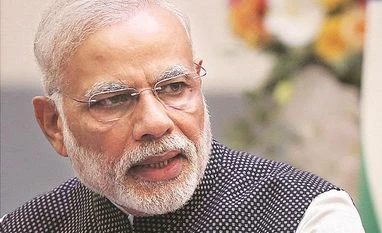
India’s Prime Minister Narendra Modi has asked his team to crunch numbers and figure out how many jobs were created in the four years of his rule -- a key factor watched by the nation headed for elections in 2019.
Ministries have been instructed to come up with a detailed note on the projects and programs undertaken by them and calculate the jobs they helped generate, according to people familiar with the matter. They were also asked to measure the impact of various programs on GDP growth, said the people, who asked not to be identified, citing rules.
The focus on jobs in the government’s report card is aimed at helping Modi counter a perception that he’s failed to deliver on his promise of creating 10 million jobs each year. That’s key if he wants to repeat his 2014 poll performance when he swept to power with the biggest electoral mandate in three decades.
Jagdish Thakkar, a spokesman in the prime minister’s office, didn’t respond to calls.
Modi, who completes four years in office on May 26, has seen mixed results in state elections and his Bharatiya Janata Party faces its next big test in the southern state of Karnataka on May 12. His popularity may have taken a hit among voters in some pockets, but he remains a favorite with investors. A fractured mandate in 2019 could make investors wary of putting money in India, especially when interest rates are rising elsewhere.
While the government introduced programs such as ‘Make in India’ that helped attract record foreign direct investment, there’s no official data on job numbers. A surprise cash clampdown in November 2016 made things worse, with people losing jobs.
Growth in the economy, which saw world-beating pace prior to the cash ban, is forecast to have slumped to a four-year low of 6.6 percent in the fiscal year 2018 that ended March 31. Unemployment remained high even during the boom years and that led to Modi’s opponents concluding that the $2.3 trillion economy was seeing jobless growth.
Modi said in his address to BJP workers on Monday that unemployment is a legacy of the previous Congress government, which ruled the country for about 60 years, adding that he’s focusing on creating more opportunities in the government as well as private sector.
India’s jobless rate dropped to 5.86 per cent in April from a 15-month high of 6.23 per cent in March, data from the Centre for Monitoring Indian Economy Pvt., a Mumbai-based business information company, show.
Employment creation is a top priority for Modi as he prepares to seek re-election early next year. Modi’s instructions to his ministerial colleagues also include ranking the top five districts that have benefited the most from government programs and studying improvement in the ease of living of citizens.
These are to be supported by anecdotal and mathematical evidence, the people said. But it’s difficult to mathematically work it out and the findings might not be accurate, said one of the officials.

 "Facing political heat, Modi asks team to find number of new jobs created")









