New WPI to have bigger food basket
Will give truer reflection on price movements of food products, impact of cereal procurement prices
Sanjeeb Mukherjee New Delhi If the recommendations of a high-powered committee on revamping the Wholesale Price Index (WPI) are accepted, the new one will have an expanded basket of food commodities, and data it will be sourced from more centres. The latter will represent almost all the producing and consuming centres.
The new WPI series is expected to be operational from either the next financial year or the middle of 2014-15.
For example, the prices of eggs will be collected from 14 centres across the country as against the current practice of taking these from only four, suggest the committee. For vegetables and fruit, prices from more cities and towns will be sourced, instead of the current practice of getting these from a select few.
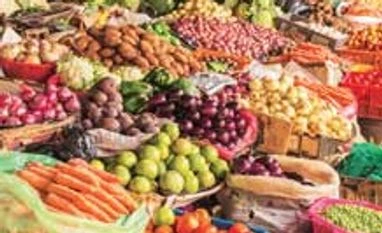
Officials said the current WPI tracks only 11 vegetables, while the proposed basket would have 17 items. Overall, the total number of items in the new WPI is expected to be around 1,200, with a stronger focus on manufacturing, against 676 at present.
"It is not that too many new items have been included in the new WPI but many items which figured on the 'others' list in the current series have been separated to form new items," Saumitra Chaudhuri, member, Planning Commission and chairman of the committee, told Business Standard.
In the current WPI, basmati and non-basmati rice varieties are not classified separately. They're clubbed in rice and also feature in the "others" category. In the new WPI, the two have been distinctly classified as separate items, under the broad category of cereals.
Also, officials said the weight of seasonal vegetables such as the Indian baby pumpkin (tinda) currently becomes zero once its season is over. In the new WPI, this period will be extended to ensure prices reflect a truer picture. The new series will also have a mechanism for factoring in the effect of the government's procurement prices of cereals. "This impact did not get adequate weight in the old WPI, which has been corrected," said another official directly involved with the process.
However, the weight of primary items, which include unprocessed foods, will reduce in the new WPI. The weight of manufacturing is expected to rise by almost two percentage points, at the expense of food, fuel and power. The weight of primary food items will go down by 0.5-1.0 percentage points and also that of fuel and power. At present, primary articles have a weight of 20.12 per cent in the WPI. Fuel and power have 14.91 per cent.
Manufactured products have 64.97 per cent. The new weight of processed food items in manufactured category is expected to be around nine per cent, as against the existing 9.9 per cent.
NEW TRACKER - New WPI to have 2009-10 as the base year, against 2004-05 at present
- It will give flexibility to the government to shift the base to 2011-12 subsequently
- To collect prices from more centres
- Weight of primary articles, fuel and power will decline in new WPI
- Weight of manufactured products will rise about two percentage points

 "New WPI to have bigger food basket")


 Connect with us on WhatsApp