NHAI debt reaches new high of Rs 3.2 trillion; toll revenue dips 4%

Borrowing up seven times in five years, growing at a CAGR of 47.6 per cent from Rs 45,300 crore at the end of March 2016
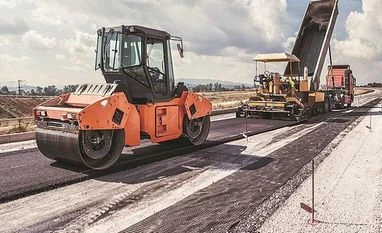
highways, nhai, roads, construction, transport
According to India Ratings, the NHAI is on track to borrow an additional Rs 65,000 crore in FY22 to fund its highway projects, taking its debt closer to Rs 3.8 trillion at the end of March next year
Krishna Kant Mumbai
4 min read Last Updated : Jul 06 2021 | 6:10 AM IST
The National Highways Authority of India (NHAI) continues to accumulate debt at a fast clip.

The highway agency’s debt reached a new high of Rs 3.17 trillion at the end of FY21, up 27 per cent from Rs 2.49 trillion at the end of March 2020.

In comparison, the highway toll revenues are estimated to have declined by 4 per cent last financial year to around Rs 26,000 crore, according to an analysis by ICRA Ratings.

As a result, the gap between the NHAI’s financial liabilities and its internal accruals or toll revenues from highways grew to an all-time high of 12.3X in FY21. The ratio was 2.5X five years ago in 2016 and 2.1X in FY14 (see the adjoining charts).

This also makes the NHAI the most indebted non-financial public sector enterprise in the country, ahead of biggies such as NTPC and Oil & Natural Gas Corporation.

According to India Ratings, the NHAI is on track to borrow an additional Rs 65,000 crore in FY22 to fund its highway projects, taking its debt closer to Rs 3.8 trillion at the end of March next year.

Just like toll revenues, the NHAI’s net worth or shareholder’s equity has failed to keep pace with its growing debt level, resulting in higher balance sheet leverage.

“The NHAI’s external borrowings increased from Rs 75,385 crore outstanding as on Mar-17 to Rs 3,16,894 crore at the end of FY21, thereby resulting in an increase in overall gearing from 0.49x in Mar-17 to 1.52x at the end of Mar21,” says CARE Ratings in its latest report.

The NHAI’s net worth declined for the first time in FY21 to Rs 2.08 trillion from Rs 2.18 trillion a year earlier.

According to ICRA, the authority reported a net loss of Rs 49,231 crore in FY20. The NHAI is yet to publish its Annual Report for FY20 and FY21.

The NHAI’s borrowing has gone up seven times in the last five years, growing at a compound annual growth rate (CAGR) of 47.6 per cent from Rs 45,300 crore at the end of March 2016. In the same period, its toll revenues have grown at a CAGR of 7.3 per cent from around Rs 18,150 crore in FY16.

The growing gap between toll revenues and NHAI borrowing is however a recent development. For a decade between FY05 and FY16, NHAI toll revenues grew faster than its debt, allowing it to maintain a healthy balance sheet.

In 10 years between FY06 and FY16, NHAI annual revenues jumped nearly 23 times growing at an annualised rate of 36.7 per cent. The revenues jumped from Rs 798 crore in FY06 to around Rs 18,150 crore in FY16. In comparison, its borrowing was up 11X during the period, from around Rs 4,000 crore in FY06 to around Rs 45,300 crore in FY16.

Rating agencies have also flagged concern about the agency’s high level of contingent liabilities due to legal cases in various courts.

“Apart from an increase in debt over the years, the contingent liabilities have also increased significantly. As on 31st March 2019, NHAI has contingent liabilities of approximately Rs 70,000 crore in Arbitration and court cases,” write analysts at CARE Ratings in their latest rating commentary on the NHAI.

A shortfall in toll revenues has increased the NHAI’s dependence on market borrowing and budgetary support from the Central government to fund its highway construction projects.

“Given increasing debt levels and debt obligations, timely infusion of funds by the government of India for meeting debt servicing will remain a key rating sensitivity factor,” wrote analysts at rating agency CRISIL at their latest rating report on the NHAI.

The NHAI receives funds from the Central government in the form of cess allocation, additional budgetary support and ploughing back tolls, monetising assets, etc and also raises funds from the market.

Rating agencies, however, say that the allocation of cess towards the NHAI has not increased commensurately with the NHAI’s rising expenditure.

“It has therefore resulted in higher dependence on Internal and extra-budgetary resources (IEBR), primarily borrowings undertaken by NHAI,” says ICRA in its latest rating action on NHAI.

One subscription. Two world-class reads.

Already subscribed? Log in

Subscribe to read the full story →
*Subscribe to Business Standard digital and get complimentary access to The New York Times

Smart Quarterly

₹900

3 Months

₹300/Month

SAVE 25%

Smart Essential

₹2,700

1 Year

₹225/Month

SAVE 46%
*Complimentary New York Times access for the 2nd year will be given after 12 months

Super Saver

₹3,900

2 Years

₹162/Month

Subscribe

Renews automatically, cancel anytime

Here’s what’s included in our digital subscription plans

Exclusive premium stories online

  • Over 30 premium stories daily, handpicked by our editors

Complimentary Access to The New York Times

  • News, Games, Cooking, Audio, Wirecutter & The Athletic

Business Standard Epaper

  • Digital replica of our daily newspaper — with options to read, save, and share

Curated Newsletters

  • Insights on markets, finance, politics, tech, and more delivered to your inbox

Market Analysis & Investment Insights

  • In-depth market analysis & insights with access to The Smart Investor

Archives

  • Repository of articles and publications dating back to 1997

Ad-free Reading

  • Uninterrupted reading experience with no advertisements

Seamless Access Across All Devices

  • Access Business Standard across devices — mobile, tablet, or PC, via web or app

Topics :NHAIMinistry of Road Transport and HighwaysHighway constructionRoad construction Highwayshighway developmentHighway expansionhighway tolltoll collection

Next Story


