Associate Sponsors

NITI Aayog plans to revive struggling real estate sector, seeks tax sops

The think tank has recommended interim relief from the GST for under-construction property nearing completion till March 31, 2019
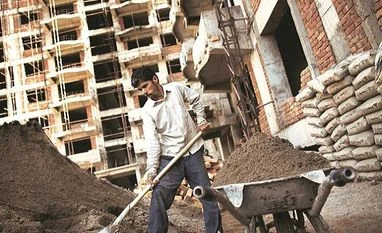
Real estate, construction, labour
Representative Image
Dilasha Seth New Delhi
Last Updated : Jul 31 2018 | 8:19 AM IST
Real estate may get a tax boost from the government, with the NITI Aayog, the government’s policy think tank, in consultation with the urban development ministry, making a case for a clutch of incentives for the sector, which is in the midst of a slowdown.

The incentives will be in the form of relaxations in direct taxes and the goods and services tax (GST).

The suggestions made to the ministry of finance are aimed at reviving the struggling sector.

The move comes after the meeting chaired by Urban Development Minister Hardeep Singh Puri last week. It was attended by heads of banks and housing finance institutions, direct and indirect tax authorities, RERA (Real Estate Regulation Act) authorities, senior officials of states, and senior officials of the NITI Aayog.

After the reduction of GST rates on paints and varnishes to 18 per cent from 28 per cent, the NITI Aayog has recommended reduction in the rate for cement as well. Besides, it has suggested bringing the stamp duty within the ambit of the GST.


“The reduction in the rate for paints will give a boost to construction. It should also consider reducing the GST rate on cement to 18 per cent from 28 per cent. Construction is a great employment generator and needs government attention,” said a government official.

The policy think tank has also called for a hike in income tax deduction on interest on housing loans to Rs 350,000 from Rs 200,000 currently. “The Rs 200,000 limit may be increased to Rs 350,000 as this would correspond to the revised housing loan limit under priority lending for affordable housing announced by the RBI recently,” the note by NITI said. Further, it has suggested this deduction be allowed during the period of construction to mitigate hardships of home loan borrowers.

It has also recommended the abolition of the minimum alternate tax (MAT). It has said the high MAT rate neutralised the benefits of various tax schemes to promote the real estate sector.

“The real estate sector is unorganised, highly segmented and localised. Continuity is not guaranteed unlike in other sectors. Therefore, MAT credit in most cases is not availed of. So MAT should either be abolished for the sector for the next few years,” said an official.


It has also made a pitch for bringing the stamp duty under the GST. While there has been an attempt by the Council to take it up, there hasn’t been any discussion on the subject yet. “The stamp duty on immovable property should be brought within the GST ambit and tax payable by purchaser should be rationalised. It will avoid dual levy of taxation in the case of under-construction property." 

Besides, the think tank has recommended interim relief from the GST for under-construction property nearing completion till March 31, 2019. 

“This limited period of exemption will incentivise builders to expedite completion of projects. In case a builder fails to complete the project by 2019, the applicable GST may be collected with penalties,” said the official.

On the wsih list
 

  • After reduction of GST rates on paints and varnishes to 18% from 28%, the NITI Aayog has recommended reduction in the rate for cement too 
  • The NITI Aayog has suggested bringing the stamp duty within the ambit of the GST 
  • The policy think tank has also called for a hike in income tax deduction on interest on housing loans to Rs 350,000 from Rs 200,000 currently

One subscription. Two world-class reads.

Already subscribed? Log in

Subscribe to read the full story →
*Subscribe to Business Standard digital and get complimentary access to The New York Times

Smart Quarterly

₹900

3 Months

₹300/Month

SAVE 25%

Smart Essential

₹2,700

1 Year

₹225/Month

SAVE 46%
*Complimentary New York Times access for the 2nd year will be given after 12 months

Super Saver

₹3,900

2 Years

₹162/Month

Subscribe

Renews automatically, cancel anytime

Here’s what’s included in our digital subscription plans

Exclusive premium stories online

  • Over 30 premium stories daily, handpicked by our editors

Complimentary Access to The New York Times

  • News, Games, Cooking, Audio, Wirecutter & The Athletic

Business Standard Epaper

  • Digital replica of our daily newspaper — with options to read, save, and share

Curated Newsletters

  • Insights on markets, finance, politics, tech, and more delivered to your inbox

Market Analysis & Investment Insights

  • In-depth market analysis & insights with access to The Smart Investor

Archives

  • Repository of articles and publications dating back to 1997

Ad-free Reading

  • Uninterrupted reading experience with no advertisements

Seamless Access Across All Devices

  • Access Business Standard across devices — mobile, tablet, or PC, via web or app

Next Story


