No plans to revise fiscal deficit target or cut spending now: Sitharaman

The government cut corporate tax rates on Friday in a surprise move designed to woo manufacturers, revive private investment and lift growth from a six-year low.
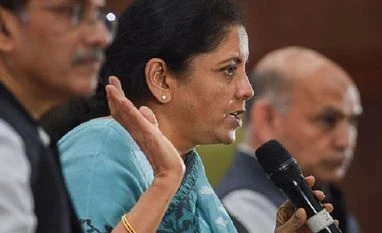
Finance Minister Nirmala Sitharaman addresses a press conference, in Chennai, Sunday, Sept 1, 2019. (PTI Photo/R Senthil Kumar)
Manoj Kumar | Reuters New Delhi
2 min read Last Updated : Sep 23 2019 | 1:45 PM IST
The government will not revise its fiscal deficit target immediately and is not planning any spending cuts at this stage, said Finance Minister Nirmala Sitharaman on Sunday, after slashing corporate tax rates to boost a flagging economy.

The government cut corporate tax rates on Friday in a surprise move designed to woo manufacturers, revive private investment and lift growth from a six-year low that has led to major job losses and fueled discontent in the countryside.

Though equity markets welcomed the move, bond yields spiked to a near three-month high on speculation the government may have to borrow more to meet its spending needs.

The measures will cut revenue by Rs 1.45 trillion ($20.4 billion) in the current fiscal year, according to government estimates. But Sitharaman said the government would only review the fiscal deficit target closer to the 2020/21 budget.

"At this point of time we are not revising any target. The decision will be taken later," she told reporters at her residence in New Delhi on Sunday, adding that there was no plan to cut spending currently.

Sitharaman also said the government would decide on additional market borrowings for the second half of 2019/20 later.

Ratings firm S&P Global said on Friday India's move to cut corporate tax rates was a "credit negative development" despite potentially boosting the economy as it will widen its fiscal deficit.

Government sources told Reuters this month that India is likely to miss its fiscal deficit target for the current financial year and, toward the end of 2019, be forced to raise it to 3.5% of GDP from 3.3% after economic growth fell to a six-year low of 5% in the April-June quarter.

One subscription. Two world-class reads.

Already subscribed? Log in

Subscribe to read the full story →
*Subscribe to Business Standard digital and get complimentary access to The New York Times

Smart Quarterly

₹900

3 Months

₹300/Month

SAVE 25%

Smart Essential

₹2,700

1 Year

₹225/Month

SAVE 46%
*Complimentary New York Times access for the 2nd year will be given after 12 months

Super Saver

₹3,900

2 Years

₹162/Month

Subscribe

Renews automatically, cancel anytime

Here’s what’s included in our digital subscription plans

Exclusive premium stories online

  • Over 30 premium stories daily, handpicked by our editors

Complimentary Access to The New York Times

  • News, Games, Cooking, Audio, Wirecutter & The Athletic

Business Standard Epaper

  • Digital replica of our daily newspaper — with options to read, save, and share

Curated Newsletters

  • Insights on markets, finance, politics, tech, and more delivered to your inbox

Market Analysis & Investment Insights

  • In-depth market analysis & insights with access to The Smart Investor

Archives

  • Repository of articles and publications dating back to 1997

Ad-free Reading

  • Uninterrupted reading experience with no advertisements

Seamless Access Across All Devices

  • Access Business Standard across devices — mobile, tablet, or PC, via web or app

Topics :Nirmala Sitharamanfiscal deficitcorporate taxcorporate tax cut

Next Story



