Nod to greater tariff cuts to APTA nations
Govt expects trade gains from APTA to flow in soon to counter fall in merchandise exports
Subhayan Chakraborty New Delhi The Cabinet on Monday gave its nod to greater concessions to countries, which are part of the Asia Pacific Trade Agreement (APTA), to boost commerce in the southeast Asian region.
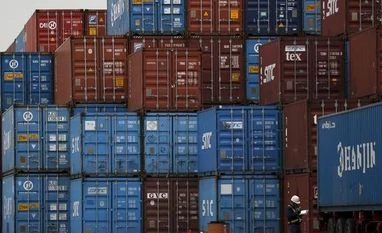
Formalised in 1975 as the Bangkok Agreement, the preferential agreement of APTA covers Bangladesh, South Korea, Sri Lanka, China, and Laos. The oldest such pact in the region, APTA has seen four rounds of negotiations with the last one being recently finalised. The updated conditions will see the number of products given duty concessions go up from 570 to more than 3,100. This represents 28 per cent of the total 11,000 tariff lines India currently trades in.
All nations will accordingly provide approximately 28 per cent of its tariff lines at concessional rates.
The trade pact is the only operational one linking India and China.
Commerce and Industry Nirmala Sitharaman said China will offer concessional rates on textile, chemicals, pharmaceuticals and iron and steel products among others which is expected to benefit India. However, doubts remain over Indian steel manufacturers’ ability to exploit the opportunity as China is currently suffering issues of oversupply in domestic steel production.
The margin of preference (MoP) on items has been increased from 23.9 per cent to 33.45 per cent, implying that duties on each of individual products will be reduced by a third for importing countries.
India will be focusing on importing products generally sourced through government procurement, Sitharaman said. This includes railway locomotives, rolling stock and nuclear items, among others. Among exports, India is primarily aiming to boost outbound shipment of raw products like mineral ores and rare earth elements.
Among the nations which are part of APTA, India already has preferential trade pacts with Sri Lanka and Korea. India is also negotiating a mega trade pact in the same region - the Regional Comprehensive Economic Partnership (RCEP) which includes Laos among all other Asean nations and their free trade partners including Korea and China.
“India, by contrast, remains a bright spot — with strong growth and rising real incomes,” she said.
The ASEAN-5 economies — Indonesia, Malaysia, the Philippines, Thailand and Vietnam — are also performing well, while countries such as Mexico continue to grow,” Lagarde said.
She said regarding fiscal policy, for most countries the issue is how to make policies more growth friendly.
This can be done by shifting the composition of revenue and expenditure.
“India, for example, has reduced spending on costly energy subsidies so it can invest more in growth-enhancing social infrastructure. Japan is investing in childcare to help more women work, which will boost growth over the medium term,” she said.
OTHER DECISIONS - Signing and ratification of the extradition treaty between India and Afghanistan, providing legal framework for extradition of terrorists, economic offenders and other criminals from and to Afghanistan
- The Bilateral technical arrangement between India and Switzerland on the identification and return of Swiss and Indian Nationals and its implementation
- The creation of the Higher Education Financing Agency to give a major push for creation of high quality infra in premier educational institutions
- Nod to proposal for initiation of the third phase of technical education quality improvement programme, with total project outlay of Rs 3,600 cr
- MoU between India and South Africa for promoting bilateral cooperation in the field of information and communication technologies

 "Nod to greater tariff cuts to APTA nations")


 Connect with us on WhatsApp