Agriculture no longer main rural income source

But this neither seen a marked rise in job opportunities in these areas nor bridged disparity in worker productivity
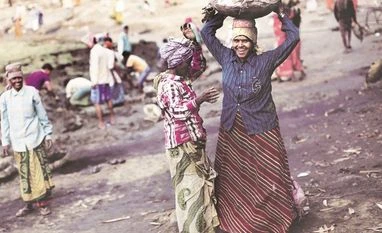
Non-farm activities contribute two-third income in rural areas: Paper
Rural
Sanjeeb Mukherjee New Delhi
Last Updated : Nov 16 2017 | 12:16 AM IST
Non-farm activities, not agriculture, generated more than two-thirds of the income in rural areas. But this hasn’t translated into significant rise in employment opportunities in these areas or bridged disparities in worker productivity, a discussion paper floated by agriculture economist and NITI Aayog member Ramesh Chand said.

The paper, released on Wednesday, found that in the four decades from 1970-71 to 2011-12, rural output increased almost seven times (at constant prices) and rural economy turned more non-agricultural, with the share of agriculture in rural income reduced to 39 per cent. But rural employment did not even double during this period.

“In fact, employment growth decelerated over time and reached a negative range after 2004-05,” the paper, Changing Structure of Rural Economy of India, Implications for Employment and Growth, said.

More than half the value added in the manufacturing sector in India was contributed by rural areas, it said.

The paper said there was de-feminisation of rural workforce between 2004-05 and 2011-12 as women workers withdrew from agriculture in large numbers. Most women workers who withdrew from farm work and stayed back at home belonged to agricultural labour households, whose economic conditions are usually not good. “Clearly, women in agricultural labour households do not prefer to go for farm work,” the report said.

Workers moving out of agriculture to the rural labour force were largely getting absorbed in construction activities, it added. The report said lack of required skills and technical knowledge were the main barrier for rural workers wanting to enter manufacturing.

It said the services sector has played a major role in structural transformation of the economy but its achievements during the recent years were mainly concentrated in urban areas. In rural areas, this sector witnessed a deceleration in output as well as employment after 2004-05.

Citing a United Nations report, the paper observed that population projections indicated India would continue to be predominantly rural till 2050, after which urban population was estimated to overtake rural population.

One subscription. Two world-class reads.

Already subscribed? Log in

Subscribe to read the full story →
*Subscribe to Business Standard digital and get complimentary access to The New York Times

Smart Quarterly

₹900

3 Months

₹300/Month

SAVE 25%

Smart Essential

₹2,700

1 Year

₹225/Month

SAVE 46%
*Complimentary New York Times access for the 2nd year will be given after 12 months

Super Saver

₹3,900

2 Years

₹162/Month

Subscribe

Renews automatically, cancel anytime

Here’s what’s included in our digital subscription plans

Exclusive premium stories online

  • Over 30 premium stories daily, handpicked by our editors

Complimentary Access to The New York Times

  • News, Games, Cooking, Audio, Wirecutter & The Athletic

Business Standard Epaper

  • Digital replica of our daily newspaper — with options to read, save, and share

Curated Newsletters

  • Insights on markets, finance, politics, tech, and more delivered to your inbox

Market Analysis & Investment Insights

  • In-depth market analysis & insights with access to The Smart Investor

Archives

  • Repository of articles and publications dating back to 1997

Ad-free Reading

  • Uninterrupted reading experience with no advertisements

Seamless Access Across All Devices

  • Access Business Standard across devices — mobile, tablet, or PC, via web or app

Next Story


