
Note ban made honest, hardworking taxpayers suffer: Parliamentary committee
Finding was part of the panel headed by Congress' T Subbarami Reddy
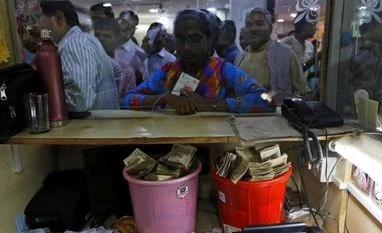 "Note ban made honest, hardworking taxpayers suffer: Parliamentary committee")
premium
Explore Business Standard
Finding was part of the panel headed by Congress' T Subbarami Reddy
A Parliamentary committee said that the objective of Narendra Modi government's decision to demonetise Rs 500 and Rs 1,000 currency notes may have been to curb corruption but in the process "honest, hardworking and tax paying citizens of India were made to suffer."
In its 233rd report tabled in the Rajya Sabha today, the Committee on Subordinate Legislation also said that the decision was an effort to combat corruption, tax evasion, counterfeiting and black money. But it was "inevitably" the low income and rural households that were hardest hit by the currency reform.
It said that demonetisation "weighed heavily on the country's manufacturing sector". The committee recognised that the Finance Ministry took steps to mitigate the effects, "it cannot be ignored that it created significant disruption throughout the economy and threatened economic output."
The Committee on Subordinate Legislation scrutinises whether the executive's power, as delegated to it by Parliament, to make rules, regulations, bye-laws, schemes or other statutory instruments, or what are called subordinate legislations, have been property exercised.
In its report, the committee observed that demonetisation "virtually affected every sector of the economy", but particularly labour intensive micro, small and medium enterprises (MSME) sector, agriculture and textiles were worst affected due to loss of livelihoods as most of the wages were paid in cash.
The committee said it appreciated the government's efforts to move towards cashless economy. It said India's economy relies predominantly on cash and the impact of demonetisation was "greater than anticipated". It said that only less than half of the population uses banking system for monetary transactions. "As a result, demonetisation has hit trade and level of consumption very hard," the 15-member committee, headed by Congress' T Subbarami Reddy, said.
In its defence, the government said it took measures to mitigate the impact to MSME, agriculture and other sectors. It said the Income Tax Department's multi-pronged action led to detecting undisclosed income of Rs 4,172 crore from November 9 to December 28.
On restrictions on withdrawal of money, the committee said it was "anguished" to note that such a major exercise was carried out without any adequate survey or research on the needs of the different sectors of the economy. It noted the need for cash varies for different sectors, and uniform restrictions led to collapse of such sectors as tea gardens and construction.
The committee asked the Finance Ministry and Reserve Bank of India to hold discussions with the affected parties and provide support to those sectors that had virtually collapsed during the demonetization process.
Already subscribed? Log in
Subscribe to read the full story →

3 Months
₹300/Month
1 Year
₹225/Month
2 Years
₹162/Month
Renews automatically, cancel anytime

Over 30 premium stories daily, handpicked by our editors


News, Games, Cooking, Audio, Wirecutter & The Athletic
Digital replica of our daily newspaper — with options to read, save, and share


Insights on markets, finance, politics, tech, and more delivered to your inbox
In-depth market analysis & insights with access to The Smart Investor


Repository of articles and publications dating back to 1997
Uninterrupted reading experience with no advertisements


Access Business Standard across devices — mobile, tablet, or PC, via web or app
First Published: Apr 11 2017 | 1:52 AM IST


