In a major relief for plant breeders and farmers, the Protection of Plant Varieties and Farmers’ Rights (PPVFR), the regulatory authority which supervises the rights of seed companies, has decided to dispense with the requirement of no-objection certificates (NoC) from the trait developer for breeding new Bt cotton varieties with genetically modified (GM) traits.
Informed sources said that the authority, under the chairmanship of R R Hanchinal, passed the resolution in its meeting held recently after receiving complaints from the users of GM cotton seeds, popularly known as Bt cotton, about the arbitrariness of the NoC stipulation, which was leading to a monopoly by its developer Monsanto. Based on its earlier decision, the authority obtained a legal opinion that indicated that the NoC stipulation was contravening the legal provisions and giving an undue advantage to trait developers like Mahyco Monsanto Biotech (MMBL).
MMBL is a 51:49 per cent joint-venture between the American biotech company Monsanto Inc and Indian company Maharashtra Hybrid Company Ltd (Mahyco) that licenses the GM insect-resistance trait in cotton. A notification in this regard is expected shortly.
Attempts to reach Monsanto India and MMB did not yield any result.
Confirming the development, M Ramasami, managing director of Hyderabad-based Rasi Seed and president of the National Seed Association of India (NSAI), said, "We have come to know about this decision through our industry colleagues but not seen a notification yet. While this is good for the domestic seed companies, fresh investment in trait development would get impacted."
However, Shivendra Bajaj, who heads the representative body of leading biotech companies in India, says that the existing clause does not undermine the rights of the breeders at all. Instead, the requirement of an NoC ensures that the breeder has not violated third party rights while seeking registration.
"A letter of confirmation or NoC from the technology provider would ensure that proper and accurate information is submitted by the seed company to the regulatory authorities at the time of application. This also ensures a fair and transparent mechanism for farmers and regulators to define the critical credentials of the variety. The NoC requirement does not in any way undermine the rights of the plant breeder to seek variety registration," said Shivendra Bajaj, Executive Director of the Association for the Biotech Led Enterprises- Agriculture Group (Able - Ag).
A senior industry official said, "The requirement of NoC from the trait developer for registration of a variety or hybrid containing a GM trait had no basis in the PPVFR Act. Hence, this needs to be dispensed with.”
Upon protest by the NSAI, the Genetically Engineering Approval Committee (GEAC) stopped giving approvals for new new varieties and transferred the responsibility to the Indian Council of Agricultural Research (ICAR)/Department of Agriculture and the Cooperation & Farmers Welfare (DACFW), who removed the NoC stipulation from trait developer in the guidelines published on April 2017. With this, breeders and farmers will be able to freely use any GM trait for developing new varieties leading to a competitive situation in the country.
Meanwhile, the authority is expected to proceed with registration of fresh applications for new varieties without NoC from the trait developer after the notification.
According to sources, the PPVFR has been insisting on this since 2011 but finalised the decision only in 2015.
GM cotton, the first GM product, was launched in India in 2002. It resulted in an increase in cotton productivity in its initial four–five years. Farmers rapidly shifted to using Bt cotton that offered low use of pesticides, resulting in huge savings in a farmer's raw material use.
Its use spread rapidly across 95 per cent of India’s cotton acreage, a situation that continues even today. But, overall yield reportedly started stagnating after the initial success. An increase in cotton output, therefore, was attributed to the proportionate increase in acreage.
Scientific studies prove that the Bt trait only gives protection against bollworms but no improvement in yield. However, as non-Bt cotton can't survive aside of Bt cotton due to pest migration from the latter to the former, all farmers were forced to adopt Bt cotton. Farmers who grow non-Bt cotton along with Bt cotton would face severe infestation by pests migrating from the Bt crop area.
Further, it can be clearly deduced from data that the productivity enhancement in cotton is due to the adoption of hybrids and not because of Bt genes, said an industry official.

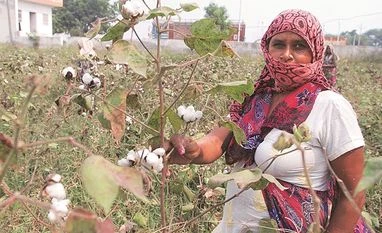 "Now, farmers can breed new Bt cotton varieties without NoC from developer")












 Connect with us on WhatsApp