NPS more attractive now than EPF: R V Verma
Interview with Member (finance), Pension Fund Regulatory and Development Authority
Indivjal Dhasmana Finance Minister Arun Jaitley did not withdraw the tax exemption on withdrawal of 40 per cent of a subscriber's corpus from the National Pension System (NPS). However, he has also not agreed to the Pension Fund Regulatory and Development Authority (PFRDA)'s request for tax parity with Employees' Provident Fund (EPF). But PFRDA Member (Finance)
R V Verma tells Indivjal Dhasmana that under the new scheme of things, NPS would now be more attractive than EPS. Edited excerpts:
The government has retained tax exemption on 40 per cent withdrawal from NPS. But for EPF the exemption is 100 per cent now. How do you see the National Pension System faring against the EPF? NPS will be attractive. Under NPS, only 60 per cent of the corpus can be withdrawn as lump sum. Now, there is no tax on the 40 per cent. And if the person decides to invest the remaining 20 per cent also in annuity, there would be no tax on withdrawal. The idea of the government move is to make India a pensioned society.
But you wanted tax parity with EPF, which is no longer there. Your take? We had wanted a level playing field with EPF. As I told you, if a subscriber invests the remaining 20 per cent also in annuity, there would be a level-playing field with EPF. But, it is on voluntary basis and not mandatory.
Will you make it mandatory to withdraw only 40 per cent in lump sum? No. Let us see how this works. We will keep it voluntary only.
How attractive is the NPS now vis-a-vis EPF? Compared to the earlier mechanism, NPS is a lot more attractive. It is more attractive vis-a-vis EPF as well. The announcement is a big improvement from the earlier arrangement.
In the Budget for 2015-16, there was a proposal to give a choice to EPF subscribers to move to NPS. But for that, an amendment in the Employees' Provident Funds & Miscellaneous Provisions Act, 1952, was required. What is the progress in this regard? 
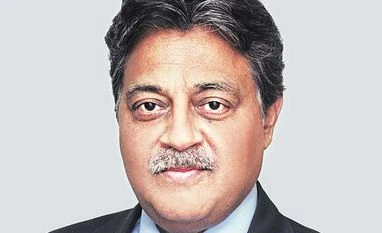 "NPS more attractive now than EPF: R V Verma")


 Connect with us on WhatsApp