Odds may stack up against GST on lotteries at Council meet on Friday

Currently, the GST rate on lottery run by state governments stands at 12%
Chart
Dilasha Seth New Delhi
3 min read Last Updated : Jun 20 2019 | 1:37 AM IST
The issue of the goods and services tax (GST) rate on lottery may turn acrimonious in the GST Council meeting on Friday, with Kerala Assembly passing a resolution against Centre’s proposal of imposing a uniform tax rate on state and private-run lotteries to curb revenue leaks due to the present dual rate structure.

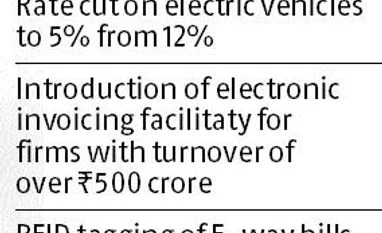
Other issues to be taken up by the Council in the half-day meeting include one-year extension for the GST anti-profiteering body, lowering GST rate on electric vehicles to 5 per cent, introduction of electronic invoicing facility for large firms, and radio-frequency identification tagging of e-way bills.

Currently, the GST rate on lottery run by state governments stands at 12 per cent, whereas lottery authorised by the state governments but run by private parties is taxed at 28 per cent. The Centre is of the view that the differential was being misused by the trade, and a majority of them were paying tax at 12 per cent. The high differential rates also encouraged non-compliance by small businesses.

Instances have come to light of a hybrid model where lotteries were run in the name of the state, but were effectively private lotteries.

According to the Union government officials, the variation of 16 per cent between two rates helped the larger states to exploit customers.

Increasing the rate on state-run lotteries to 28 per cent would lead to revenue gain of approximately Rs 1,250 crore, according to government estimates. Kerala is one of the few states with state-run lottery to collect additional revenue.

The Council will take up the report by a group of ministers led by Maharashtra Finance Minister Sudhir Mungantiwar, which has favoured a uniform GST rate of either 18 per cent or 28 per cent on state-sponsored and state-authorised lotteries. Kerala is not in favour of either increasing the rate on state-run lotteries now or lowering the rate on private ones.

“Kerala is not in favour of reducing the rate on state-authorised lotteries, while Goa, Maharashtra, and Assam are keen on a reduction in rate,” said a government official.

Ahead of the Council meeting, Kerala on Tuesday adopted a resolution against a uniform tax rate on lotteries, arguing it will affect thousands of lottery agents and sellers in Kerala, besides affecting revenue of states and the Centre.

On the other hand, Assam is strongly pitching for a uniform tax rate of 18 per cent on lotteries. 

Extension for NAA 

With 354 pending cases, the national anti-profiteering authority (NAA) will likely get a year’s extension till December 2020.

With a disposal rate of about six to seven cases a month, an extension was considered necessary. “The extension will be one year at a time, rather than giving a longer extension, which will go against the objective of creating it in the first place,” said an official. 

The NAA has passed orders in close to 60 cases so far, and in about 13, the parties have been found guilty of profiteering.

The NAA is chaired by B N Sharma and is assisted by four senior officials of the rank of joint secretary and above. According to the anti-profiteering rules under GST: “Benefits of input tax credit should have been passed on to the recipient by way of commensurate reduction in prices.”

It is still dealing with complaints related to the rate reductions made in July last year on a number of consumer durables like small-screen TVs, refrigerators, and washing machines as well as on 178 items in November 2017, including detergents, shampoos, and beauty products.

One subscription. Two world-class reads.

Already subscribed? Log in

Subscribe to read the full story →
*Subscribe to Business Standard digital and get complimentary access to The New York Times

Smart Quarterly

₹900

3 Months

₹300/Month

SAVE 25%

Smart Essential

₹2,700

1 Year

₹225/Month

SAVE 46%
*Complimentary New York Times access for the 2nd year will be given after 12 months

Super Saver

₹3,900

2 Years

₹162/Month

Subscribe

Renews automatically, cancel anytime

Here’s what’s included in our digital subscription plans

Exclusive premium stories online

  • Over 30 premium stories daily, handpicked by our editors

Complimentary Access to The New York Times

  • News, Games, Cooking, Audio, Wirecutter & The Athletic

Business Standard Epaper

  • Digital replica of our daily newspaper — with options to read, save, and share

Curated Newsletters

  • Insights on markets, finance, politics, tech, and more delivered to your inbox

Market Analysis & Investment Insights

  • In-depth market analysis & insights with access to The Smart Investor

Archives

  • Repository of articles and publications dating back to 1997

Ad-free Reading

  • Uninterrupted reading experience with no advertisements

Seamless Access Across All Devices

  • Access Business Standard across devices — mobile, tablet, or PC, via web or app

Next Story



