As demonetisation completes one year, Business Standard looks at how the government’s move to root out black money impacted businesses, economy and the common man.
“To break the grip of corruption and black money, we have decided that the Rs 500 and Rs 1,000 currency notes currently in use will no longer be legal tender from midnight tonight, that is November 8, 2016.”
Prime Minister Narendra Modi — November 8, 2016
Currency purge trips growth pace
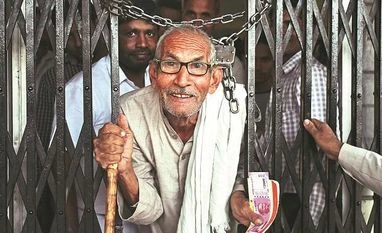
It was a decision with few parallels in India’s economic history. On November 8, 2016, in an address to the nation, Prime Minister Narendra Modi announced the withdrawal of legal tender status to Rs 500 and Rs 1,000 notes. In a country that transacts primarily in cash, this decision, which withdrew 86 per cent of the currency in circulation, caused widespread havoc, disrupting economic activity. Read more
Short-lived scare for stock markets
Prime Minister Narendra Modi’s decision to ban high-value currency notes triggered a knee-jerk reaction in the stock market, with the benchmark Sensex and Nifty declining seven per cent within a fortnight of the announcement. Several stocks in the microfinance, real estate, and other consumer-facing sectors crashed more than 50 per cent, creating panic and fear in the market. The sell-off was triggered by doomsday projections by economists that the note ban would lead to a prolonged weakness in the economy and further delay the earnings recovery cycle. Read more
Consumer durables put through the wringer
Rarely has the consumer market in India witnessed the duress it had to undergo a year ago. With close to 86 per cent of currency notes in circulation turning defunct overnight, activities came to a halt abruptly — a nightmare for an economy that draws strength from consumption-led growth. Since then much water has flown under the bridge, but the introduction of a new indirect tax structure continues to jeopardise market dynamics and disrupt business. A green shoot is, however, visible as consumer demand, of late, has improved. Read more
The backroom story: How it all played out
It was evening news time in television studios that Tuesday. In the state broadcaster Doordarshan’s newsroom, a routine advisory had landed up from the government about a possible list of experts who could be called for their views on an expected news break. Just a few hours earlier on November 8, 2016, Prime Minister Narendra Modi had met the chiefs of the army, air force and navy. Rumour mills were working full time by now and there were whispers about likely wars that the government could announce. Read more
MSMEs: Handling aftershocks
A year after the note ban, the micro, small and medium enterprises (MSMEs) sector is struggling for a revival. Manufacturers and traders, who earlier complained of a sudden dip in sales, are now finding it difficult to compete with bigger players since the goods and services tax (GST) roll-out. “Business main taklif ho rahi hai (We are facing difficulties in doing business). Production has fallen 30-35 per cent. Read more
Cash deposits from November 9 to December 30, 2016
Of the cash deposited in banks between November 9 and December 30, a staggering 35% was by proprietorships, while only 2.4% was by salaried individuals. Another 22.6% was by corporate entities, while a staggering 12.5% was deposited by those who have a PAN but don’t file returns. These insights come from a taxpayer segment analysis carried out by the income tax department. Read more
A roller coaster ride: From digital to less cash
A half-torn poster of Paytm Wallet with the first four digits of Ashok Mondol’s mobile phone pasted on the side of his grocery shop in Chittaranjan Park, a South Delhi residential colony, is the only evidence left of him ever accepting digital money. Till November last year, Mondol used his smartphone mostly to watch films. But, after the note ban, for some period, it became the main tool that kept his shop afloat. Read more
In the line of fire, note ban has been lifeblood for a listless Opposition
The Opposition believes economic slowdown and joblessness are changing the narrative on the ground. Rahul Gandhi has termed it an ‘MMD’, or a ‘Modi-Made Disaster’. But the BJP leadership expects to ride out the crisis. The top BJP leadership is confident that the party will win the Himachal Pradesh and Gujarat Assembly polls, and will showcase the victory as a referendum on the GST and its execution. Read more

 "One year of demonetisation: How Modi govt's move has impacted economy")











