
People may be free to set up standalone energy storage systems: R K Singh
The policy aims at the creation of the technology-agnostic storage system across the value chain of the electricity sector generation, transmission and distribution levels
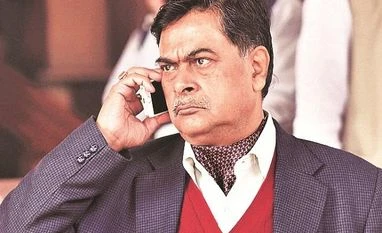 "People may be free to set up standalone energy storage systems: R K Singh")
WebinarsNew
Deep DiveNew
Explore Business Standard
The policy aims at the creation of the technology-agnostic storage system across the value chain of the electricity sector generation, transmission and distribution levels
Union Minister for Power and New & Renewable Energy R K Singh has indicated that people may be free to set up standalone energy storage systems (ESS) as the government plans de-licensing that under the policy for ESS.
According to a statement issued by the power ministry, Singh interacted with renewable energy developers, industry and various government representatives to discuss the elements of the draft policy on the energy storage system to promote the creation of storage systems on a large scale across the country.
The policy aims at the creation of the technology-agnostic storage system across the value chain of the electricity sector generation, transmission and distribution levels.
In the meeting held on January 25 with representatives of the industry, Singh galvanised the industry representatives and called for their active participation in establishing storage systems and associated manufacturing industries domestically within the country.
The minister also took a subsequent meeting on Thursday with principal secretaries and CMDs of renewable energy-rich states Punjab, Rajasthan, Maharashtra, Andhra Pradesh, Karnataka, Telangana, Kerala, Tamil Nadu, Gujarat and Madhya Pradesh.
The states welcomed the policy initiative taken by the government for the promotion of storage systems in the country. They also highlighted the efforts being taken on their side to promote pumped storage projects and battery energy storage systems, the ministry said.
During this meeting, Singh stressed the need to establish storage systems on a wide scale in the country.
He added that the energy storage system (ESS) will be an integral part of the power system under the Electricity Act and that setting up of standalone ESS may be made a delicensed activity.
Energy storage systems will benefit generating companies, distribution companies of the states, grid operators and other players in the electricity value chain.
They will facilitate peak shifting, peak shaving, ramp-up/ramp down, and frequency control in the system and enhance the utilisation of the transmission system.
ESS is considered essential for a smooth energy transition from coal-based to renewable sources and to a cleaner environment.
Highlighting the elements of the proposed policy, Singh stated that storage will henceforth be part of the renewable purchase obligation (RPO).
Singh also stated that the curtailment of renewable energy will be penalised under the provisions of the Act.
According to the proposed policy, the ESS developer will be granted the inter-state transmission system connectivity under the general network access (GNA) allowing it to sell/ purchase power from any part of the country.
Quantum of ESS included with round-the-clock (RTC) renewable energy will be counted as RPO for storage.
Renewable energy certificates (RECs) may be issued to ESS. Discoms/ obligated entities can set up their own storage or procure storage capacity or lease storage space from public or private ESS developers.
Any sale of electricity from storage or sale/ lease of storage space may be through open competitive bidding or power exchange or through tariff fixed under Sector 62 of the Electricity Act.
The policy proposes that transmission cost for RE will be waived both at the time of charging the storage as well as at the time of selling the stored RE. The participants gave their suggestions, it stated.
The participants were requested to submit any further suggestions within 15 days.
India prepares for the energy transition from fossil fuel to non-fossil fuel-based energy systems and aims to achieve the reduction in GHG/CO2 emission by one billion tonnes by 2030.
For this, India will install a total of 500 gigawatts (GW) of non-fossil fuel capacity. Energy storage systems are going to play a larger role in facilitating the large-scale integration of renewable energy sources.
In the recent COP26 summit at Glasgow, India has upped its target of electricity from non-fossil fuel-based sources to 500 GW by 2030. About 50 per cent of the total energy consumed by 2030 is expected to come from renewable sources.
The country is also aiming to have net zero emissions by 2070. Nearly 450 gigawatts (GW) out of 500 GW will come from renewable energy sources. Energy storage systems help in maximising the utilisation of renewable energy.
(Only the headline and picture of this report may have been reworked by the Business Standard staff; the rest of the content is auto-generated from a syndicated feed.)
First Published: Jan 27 2022 | 10:41 PM IST


 Connect with us on WhatsApp