Prime Minister Narendra Modi’s ambitious crop insurance scheme that promised lowest premia for farmers seems to have started on a slow note in 2016 kharif season, partly due to delayed notification by states. Some experts said the decision to keep sugarcane out of the scheme’s ambit may have impacted its coverage in states like Uttar Pradesh.
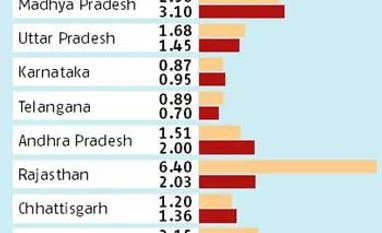
Sources said till September 8, around 25 million farmers — loanee and non-loanee — were covered under the Crop Insurance Scheme and the Weather-based Crop Insurance Scheme, about 19 per cent less than the farmers covered under the old crop insurance schemes in 2015 kharif season. Both the schemes were operational this kharif season, with states having the option to choose. While the deadline for the PM’s Insurance Scheme was on August 10, it was extended by a few days for Bihar.
Private insurance companies, however, said though the number of farmers covered could be less, the area insured as proportion of net sown area seems to have improved to 30 per cent this kharif season, compared with 20-21 per cent in 2015. But, this could be because of increase in overall acreage due to good rains.
Only 22 states notified the scheme till September 8, while 24 states and one Union Territory have started the process of implementing it. In the case of the new insurance scheme, states have to invite fresh tenders to enlist insurance companies for kharif and rabi seasons separately because premium rates are different.
For kharif crops, farmers have to pay a premium of just two per cent of the sum insured in cereals. For rabi crops, the premium has been fixed at 1.5 per cent of the sum insured. For horticulture crops, the premium has been capped at five per cent. This is much lower than the premiums charged under the three existing insurance schemes in the range of 3.5 per cent to eight per cent of the sum insured. It could be up to 20 per cent for some crops. The balance premium accruing to the insurance companies is shared equally between the Centre and states, with the former sharing up to 90 per cent of the burden. The Centre expects to spend over Rs 9,000 crore per year on the new insurance scheme.
According to sources, in Bihar, around 1 million farmers were brought under scheme till September 08, lower than 1.65 farmers covered in 2015 kharif season. Similarly, in Uttar Pradesh, around 1.45 million farmers were covered under both the schemes, lower than 1.68 million farmers who availed insurance last year.
“This is just the beginning and we feel that more farmers would be brought under the insurance fold during the rabi season,” a senior official said.
The Centre plans to bring at least 50 per cent of the 140 million farmers in the insurance fold over the next three years. According to a study by private weather forecasting agency Skymet along with industry association ASSOCHAM, less than 20 per cent of India’s farmer families have crop insurance, which is why a vast majority of them are exposed to vagaries of weather. Even among loanee farmers, insurance penetration is not 100 per cent. It is mandatory for loanee farmers to get an insurance cover.

 "PM's crop insurance scheme makes slow start in first season")


 Connect with us on WhatsApp