Power sector's coal conundrum: How flawed reforms make imports inevitable

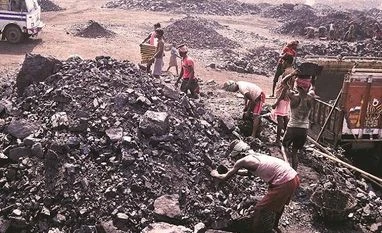
India has the world's fifth largest coal reserves at 60.6 billion tonnes, but just one, monopoly supplier: Coal India Ltd (CIL), the world's largest coal-producing company

coal
Amritha Pillay Mumbai
Last Updated : Aug 16 2018 | 1:28 AM IST
In July, Union Minister for Power R K Singh said the coal shortage would persist for two or three years, so states had been allowed to import coal. Around the same time, Union Minister for Coal Piyush Goyal said power-related coal imports had dropped 15 per cent over April-May this year owing to higher supplies from Coal India.

The disconnect between the two statements by ministers in the same government reflects the problems that afflict coal supply in India. Despite some significant reforms since 2015, the same structural issues plague power plants. Between the desire to be a zero-thermal coal import country and the need to import, what went wrong? 

India has the world’s fifth largest coal reserves at 60.6 billion tonnes, but just one, monopoly supplier: Coal India Ltd (CIL), the world’s largest coal-producing company. In FY 18, it produced about 567 million tonnes. “The real problem is the structure of the industry. It’s rare to see a quick response to market demands in a monopoly industry,” says Kameswara Rao Partner (Energy & Utilities), PwC India.

Growing demand and falling captive power consumption is amplifying the problem, he added. According to Central Electricity Authority (CEA) data, all-India peak demand for power rose 15 per cent to 173,226 Mw in May 2018, from 150,944 Mw in May 2017.


For CIL, financial years (FY) 2015 and 2016 were promising. Production rose 7 per cent year on year (YoY) in FY15 and 9 per cent in FY16. This growth slowed to 3 per cent in FY17 and 2 per cent in FY18 because, CIL officials said, power companies weren’t lifting coal and stocks were piling up even as imports dipped. 

In FY16, India’s coal imports were 203.95 million tonnes, falling to 190.95 million tonne in FY17. In FY18, they rose again, to 208.27 million tonnes, according to a parliamentary filing, and this is happening just as global coal prices are inching steadily up. 

But power companies point fingers at CIL, too. “There were a lot of technical problems, which included resources being diverted to ramp up current production between 2014 and 2016, while not preparing mines for future production, which has now left us with a shortage of prepared mines,” said a top official from a private power producer requesting anonymity. Another private power company official agrees to this view.

The government is also fighting ghosts from the past. The Supreme Court, hearing a case concerning irregularities in coal block allocations to private companies, declared about 200 coal blocks illegal in 2014, pushing that much coal supply out of the system overnight, which was then estimated to impact 28,000 Mw of power 
generating capacity.

“With the Supreme Court order, a good amount of capacity went out of the system and never got replaced. The government should have asked Supreme Court for more time, but instead chose to go in for fresh auctions,” said a power industry consultant.

The 2015 auctions — the first-ever for coal blocks in India — attracted good response from private sector bidders, but the bidding was aggressive and the final price some buyers paid was eye-popping. Bidders had bet on passing on these higher costs to the power distribution companies (discoms), but were stymied when the CEA forbade power tariff increases soon after the auctions, prompting many bid-winners to go to court. Add in post-auction land disputes (over erroneous data, for example) and delays in various statutory approvals and this additional capacity largely remains under the ground. 

 “There were many bids that were irrational. Given the balance sheet stress, over-capacity in user industries and the irrational nature of these bids, development in many of these blocks are stalled,” said Debasish Mishra, Leader Energy, Resources and Industrials at Deloitte Touche Tohmatsu in India.

For a while, the coal supply situation appeared manageable, when the ministries of coal and power were under one minister — Goyal was in charge of mines, power and coal between July 2014 and September 2017. Though the shortages persisted, better coordination helped allay the worst of the problem. 
In September last year, Goyal attempted to ease the crisis for some power assets that were stranded for want of coal supplies through Project Shakti, under which those private power producers that had viable power purchase agreements (PPAs) with discoms could bid for supplies. Shakti was expected to see the revival of power generating units, with a capacity of 10,000 Mw of power, and was one of the key solutions to the problem of 40,000 Mw of stressed power assets that are clogging the banking system today.  

Although the bidding saw the entire amount of coal on offer being contracted, procedural issues meant that this idea, too, didn’t change the supply situation much. “Schemes like Shakti got the winning bidders fuel security, but do not represent a lasting solution for all distressed assets. Also, the process of incorporating the Shakti provisions with the PPA clauses, in line with a state’s regulations, has consumed a lot of avoidable time,” says Rao.

Not everyone is pessimistic about India’s coal situation. “I expect the situation to ease in six to eight months with new mines opening, with new equipment, and CIL’s thrust on increasing production at Coal India level should ease the coal situation,” said the power company official quoted earlier in 
the story.

However, an India Ratings report on August 2 noted, “Coal inventory at power stations remained lower YoY, driven by an increase in coal demand, owing to the peak summer season and lower YoY hydro and wind generation” (see table “Mine over matter”).

All in all, power producers agree that coal imports are here to stay. In a reply to a Lok Sabha question on July 25 Goyal admitted as much: “Coal import by power plants has reduced from 80.58 MT [million tonnes] in 2015-16 to 56.41 MT in 2017-18. However, there is a gap between demand and domestic supply of coal, which cannot be bridged completely as there is insufficient domestic availability of coking coal and power plants designed on imported coal will continue to import coal for their production,” the reply from the coal ministry read. 

In other words, the more things change, the more they stay the same. 

One subscription. Two world-class reads.

Already subscribed? Log in

Subscribe to read the full story →
*Subscribe to Business Standard digital and get complimentary access to The New York Times

Smart Quarterly

₹900

3 Months

₹300/Month

SAVE 25%

Smart Essential

₹2,700

1 Year

₹225/Month

SAVE 46%
*Complimentary New York Times access for the 2nd year will be given after 12 months

Super Saver

₹3,900

2 Years

₹162/Month

Subscribe

Renews automatically, cancel anytime

Here’s what’s included in our digital subscription plans

Exclusive premium stories online

  • Over 30 premium stories daily, handpicked by our editors

Complimentary Access to The New York Times

  • News, Games, Cooking, Audio, Wirecutter & The Athletic

Business Standard Epaper

  • Digital replica of our daily newspaper — with options to read, save, and share

Curated Newsletters

  • Insights on markets, finance, politics, tech, and more delivered to your inbox

Market Analysis & Investment Insights

  • In-depth market analysis & insights with access to The Smart Investor

Archives

  • Repository of articles and publications dating back to 1997

Ad-free Reading

  • Uninterrupted reading experience with no advertisements

Seamless Access Across All Devices

  • Access Business Standard across devices — mobile, tablet, or PC, via web or app

Next Story




