Indirect tax base has surged 65% to 11.6 mn since GST roll-out: PM Modi

Experts feel this might prompt govt to cut rates
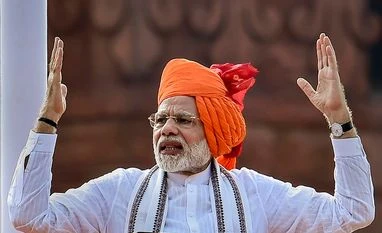
Prime Minister Narendra Modi at Red Fort on 72nd Independence Day
Indivjal Dhasmana New Delhi
Last Updated : Aug 15 2018 | 11:45 PM IST
The indirect tax base in the country has expanded by 65 per cent to 11.6 million in a year since the roll-out of the goods and services tax (GST) on July 1, 2017, said Prime Minister Narendra Modi during his Independence Day speech on Wednesday.

Under the previous tax regime, it was 7 million. The number of people filing direct taxes has also increased to 67.5 million, compared to 40 million in 2013-14 — a rise of 68 per cent.

The PM urged everyone to pay their taxes, which fund programmes for the poor. “An honest’s taxpayer’s family feeds three poor families,” he said.

Analysts claim the increase in the tax base could further reduce the GST rates. “This should result in GST revenue collections increasing, which, in turn, may encourage the government to rationalise the GST rates more,” Abhishek Jain, partner at EY, said. 

The GST Council cut rates on 100 items in July. According to the official data, 6.6 million returns were filed in July. 

The Economic Survey for 2017-18 showed 9.8 million businesses registered under the GST as of December last year. “Adjusting the base for double and triple counting, the GST has increased the number of unique indirect taxpayers by more than 50 per cent — a substantial 3.4 million,” it said.

About 1.7 million registrants fell below the GST threshold, but chose to be part of it. Those with an annual turnover of Rs 2 million can opt out. Also, more than 50 per cent of those who could have opted for the simpler composition scheme chose to register under the regular GST scheme, the survey said.

On Wednesday, the PM said small and medium businesses had some initial difficulties in the GST regime, but now they had embraced it. A committee headed by Minister of State for Finance Shiv Pratap Shukla is looking at how to simplify procedures for micro, small and medium enterprises.
 
Modi said the previous United Progressive Alliance (UPA) government could not implement the GST because of a lack of decision making.

Without taking the name of the International Monetary Fund (IMF), Modi referred to its observation that the elephant — a metaphor for the Indian economy — had begun to run. Referring to another IMF forecast, he said the Indian economy would drive world economic growth for the next 30 years.

“From being a part of the Fragile Five group, we have become a multi-trillion destination,” he said, referring to India touching the 100th position in the World Bank Ease of Doing Business ranking.

Among other achievements, he spoke of the government providing electricity to all villages and liquefied petroleum gas (LPG) to the poor, and enacting of laws such as the Insolvency and Bankruptcy Code (IBC) and the Benami Transactions (Prohibition) Act. 

Modi said the government had provided Mudra loans to 130 million people, of whom 40 million were first-time borrowers. He referred to a report, claiming that 50 million people had been brought above the poverty line in the past two years. The PM said the government had saved Rs 900 billion by ending pilferage. 

Industry leaders hailed the government’s reforms. Ficci President Rashesh Shah said the GST and the IBC were already yielding results, and reforms would yield high growth.

One subscription. Two world-class reads.

Already subscribed? Log in

Subscribe to read the full story →
*Subscribe to Business Standard digital and get complimentary access to The New York Times

Smart Quarterly

₹900

3 Months

₹300/Month

SAVE 25%

Smart Essential

₹2,700

1 Year

₹225/Month

SAVE 46%
*Complimentary New York Times access for the 2nd year will be given after 12 months

Super Saver

₹3,900

2 Years

₹162/Month

Subscribe

Renews automatically, cancel anytime

Here’s what’s included in our digital subscription plans

Exclusive premium stories online

  • Over 30 premium stories daily, handpicked by our editors

Complimentary Access to The New York Times

  • News, Games, Cooking, Audio, Wirecutter & The Athletic

Business Standard Epaper

  • Digital replica of our daily newspaper — with options to read, save, and share

Curated Newsletters

  • Insights on markets, finance, politics, tech, and more delivered to your inbox

Market Analysis & Investment Insights

  • In-depth market analysis & insights with access to The Smart Investor

Archives

  • Repository of articles and publications dating back to 1997

Ad-free Reading

  • Uninterrupted reading experience with no advertisements

Seamless Access Across All Devices

  • Access Business Standard across devices — mobile, tablet, or PC, via web or app

Next Story


