Powering ahead, AAP to face tough test on electricity bills
Power companies are of the view that if the power rates are halved, the amount of subsidy would need to be doubled
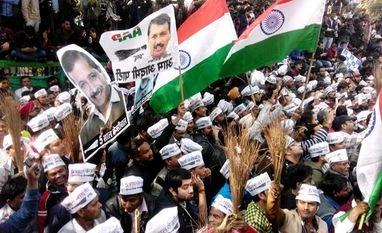
Shreya Jai New Delhi As Arvind Kejriwal led Aam Aadmi Party sweeps the Delhi elections with electrifying margins, living up to its promise to reducing electricity bills could be a tough task ahead.
In their manifesto, AAP has promised reducing the electricity bills by half which currently at lowest in the country at Rs 3 per unit in the minimum consumption slab. Going by the calculations shared by the Delhi power distribution companies, any tariff lower than Rs 3-2.8 per unit is practically impossible for the Delhi’s state budget to bear.
At the current power rates, Delhi discoms in spite of least amount of subsidy (Rs 300 crores annually) have regulatory assets of Rs. 22,000 crore. Also, Delhi's bulk power purchase rate was 60 per cent higher than the national average of Rs 3.49 a unit, but power tariff charged from the consumers in the state were the lowest in the country at Rs 2.8 a unit said an executive with one of the distribution companies.
Delhi has three power distribution companies viz Tata Power Delhi Distribution Limited (TPDDL) and Anil Ambani promoted BRPL and BYPL. In past 10 years, the AT&C losses have come down to 11 per cent leading to savings of Rs 13,000 crore to the state.
The power companies are of the view that if the power rates are halved, the amount of subsidy would need to be doubled. “This subsidy amount would exceed the budgeted capex allocation of Delhi Govt. budget. Then, subsidy is recovered indirectly by way of taxes from citizens only,” said a senior executive in one of the Delhi discoms.
Industry calculations said Delhi’s state budget for FY14 was Rs 35,500 crore while the total subsidy out got for electricity and water works out to be Rs 1800 crore “Hence, subsidy given is 5 per cent of the Delhi state budget, 10 times higher than AAP’s claim,” said the executive.
The energy charge levied by the power distribution companies increased to Rs 3 a unit in from Rs 1.8 in 2002, but power purchase costs tripled to Rs 5.6 per unit during the same period. The additional revenue which cannot be passed to the consumers has created over-dues of Rs 30,000 crore for the distribution companies, as they bear the cost.
The Delhi Electricity Regulatory Commission last November rolled back a rate hike in less than 24 hours and its officials said a review would be conducted after the Assembly elections. Eighty-five per cent of a distribution company's cost is the power purchase cost, price of which is market determined.
Fact check
- Any further reduction and subsidy burden on state government to double
- Financial burden on discoms to increase with per rate decrease in tariff
- Power tariff hike owing to power purchase cost going up deferred several times under political pressure

 "Powering ahead, AAP to face tough test on electricity bills")


 Connect with us on WhatsApp