Home / Economy / Interviews / Powers of the RBI are not in doubt at all, says governor Shaktikanta Das
Powers of the RBI are not in doubt at all, says governor Shaktikanta Das
"It is the right of any person - individual or legal corporate entity - to challenge the decision of any authority in the court of law. The RBI cannot be an exception to this"
The SC mandates the RBI to exercise its powers under Section 35AA in respect of specific defaults by debtors. RBI’s powers under this and other sections of the Banking Regulation Act are not in doubt at all. The RBI will take necessary steps, including issuance of a revised circular, for expeditious and effective resolution of stressed assets. The RBI stands committed to maintain and enhance momentum of resolutions.
A revised circular will be out soon and there will not be any undue delay.
Does the series of instances where the RBI has been taken to court in the past few months concern you?
It is always the right of any person - individual or legal corporate entity - to challenge the decision of any authority in the court of law. The RBI cannot be an exception to this.
A draft discussion paper is always put up on the RBI website before a decision is taken. But it has to be appreciated that there are certain regulatory aspects and, considering their criticality, it is not possible to place them in the public domain. These are cases where the RBI has to act based on its own judgement and discussions with stakeholders and experts.
Does the MPC risk falling behind the curve in terms of strengthening the domestic growth impulse just by giving 25 basis points cut when you had room to do more?
We are conscious of the fact that there has to be effective transmission of rates. Banks have cut their marginal cost of funds based lending rate (MCLR) by 10 basis points. But more needs to be done. There are upsides and downsides (to rate decisions), which has to be taken into account and based on that a considerate call has to be taken. So, it is the MPC’s considerate call that at this point a 25 basis points cut was required. We have cut rates by 50 basis points in two successive MPC meetings. During this entire period, you will also have to factor in the aspect that RBI has taken a lot of action for infusing additional liquidity in the system not only by way of open market operations (OMO) but also by currency swap.
The Bimal Jalan report on RBI’s capital reserves was supposed to come out on March 31…
I had a discussion with the chairman of the committee (Jalan), and I believe they need a few days more to finalise the report. I have not gone into details of the panel’s discussions as it is the committee’s prerogative.
Rate cuts are transmitted faster in a liquidity surplus situation, while hikes get transmitted quicker in deficit. Will there be a change in stance on liquidity, given we are in a deficit situation? And, will the preferred instrument be OMO or dollar swap?
It shall be the RBI’s effort to ensure there is adequate liquidity in the system. Currency swap is an additional instrument that we added to our toolkit to deal with the liquidity infusion. We will use all the tools, including OMO, currency swap, etc, depending relevant factors. We have already infused adequate liquidity in the market. For example today, by increasing liquidity coverage ratio by 2 percentage points and taken some measures in the interest rate derivatives market.
Do you have a formula in mind between OMO and swaps?
Depending on evolving money-market situation and macroeconomics, we will use all the instruments. There cannot be a fixed ratio.
Would you expect banks to make provisions on loans given to IL&FS?
We have filed a petition before the NCLAT (National Company Law Appellate Tribunal) seeking a modification of their order. NCLAT will have to hear our petition and decide accordingly.
Did the government’s borrowing plan weigh on the decision to cut rates?
The borrowing requirement of both the government and the private sector was taken into consideration before arriving at this decision.

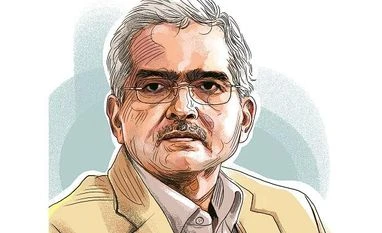 "Powers of the RBI are not in doubt at all, says governor Shaktikanta Das")











