
Public transport should be self-sustainable, not beg for subsidy: DMRC MD
In a Q&A with Business Standard, Mangu Singh justifies the 50% hike on some Delhi Metro routes
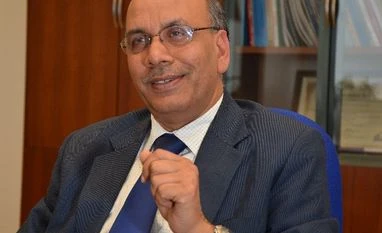 "Public transport should be self-sustainable, not beg for subsidy: DMRC MD")
premium
WebinarsNew
Deep DiveNew
Explore Business Standard
In a Q&A with Business Standard, Mangu Singh justifies the 50% hike on some Delhi Metro routes
The fare has been raised by almost 50 per cent. How would you justify such a hike for a public transport system?
We have no option, no authority rather. The fare fixation is not in the hands of DMRC. There is mechanism provided in the Act so that there is no arbitrary increase by DMRC. The committee is headed by a sitting or retired judge and one member each from the Central and State Governments, of Additional Secretary rank. So it's a very high-level committee and it considers proposals by DMRC and after deliberation following feedback from the public, they decide. Also, it's not exactly what we had asked for.
So what was DMRC's demand from the committee?
We had asked for more. Because we wanted 100 per cent neutralisation of electricity cost and staff cost. The last time the fare was revised was in 2009. By 2017, there has been an increase in input cost so we clearly wanted much more. But the committee took feedback from the public, appointed an expert from NITI Aayog and then arrived at this.
The Act provides that once the recommendation is given by the committee, it is binding on the DRMC administration. Makers of the Act thought it wisely to avoid any external influence on this.
How much has your input cost increased?
Electricity charges have increased by more than 130 per cent. But we are not asking for a 3x hike. The increase in volume has taken care somewhat.
The footfall has increased considerably with the metro becoming the artery of the city. Why was volume unable to subsidise the cost?
You should understand that by increasing number of passengers, the cost of operation doesn't increase in the same proportion as fixed assets are there. During the hike this was taken into account.
How much would your debt be now?
We are under about Rs 24,000 crore as on date including phases 1, 2 and 3. It is all JICA. We have started repaying the phase-1 loan. We are repaying in tranches. In next five years the outgo would be Rs 5,000 crore, so yearly we pay around 800-900 crore for debt servicing.
During the initial phase, the capital cost was so much that debt was an overhang at DMRC. Was there a mismatch there?
When a project is sanctioned it takes into account next 30 years of repayment. So you know how much you will repay every year and the revenue. At the time of sanctioning the project and financial model we know how much loan we can sustain. Fare hike in progression and how revenue will increase and the nature of repayment is also decided.
Now, if you see DPR, it talks of regular increase in fare. Check any new metro project approved by the government, there will be a proper fare revision mechanism, so that repayment is ensured. It isn't because we have to repay that we are increasing fares, in fact we have delayed (the fare hike).
So such a massive hike was the only way forward?
Yes, of course -- if we have to service our loan, pay salary to our staff, pay the electricity bill. The electricity given to us is not subsidised. So if really fares have to be capped low, these are the areas. Let electricity be given to us at subsidised rates.
In terms of public transport where both Centre and State hold equity, fare hike becomes a political issue. How does one go about in such a case?
You have to weigh the whole thing. Suppose I am not allowed to increase the fare, then I won't be able to repay the loan. The funding pattern should be different then -- more equity by the government and less loan. That luxury we don't have. So if we have to construct more lines, we need to borrow more. The question is whether you want to have the metro or not. If the fare isn't increased at all, and the government decides to shoulder the burden, then there is no need to go for borrowing. If there is a policy decision at the government level that there will be no fare increase, then you have to find money from various resources.
In this public transport system, do you think it should be for profit or larger public good?
It should be for larger public good and not profit. But at the same time, it should be a sustainable in itself. It should not depend on subsidy, as it takes away the autonomy of the organisation, which will always be with a begging bowl. Its survival then depends on only begging so the system will never work. If the system is self-sufficient, it will work.
For a person of low income who works in Old Delhi and stays in Faridabad, the to-and-fro journey will cost around Rs 60. Doesn't that contradict the whole idea of public good?
That should be taken care of by the Minimum Wages Act and actually is (taken care of). If you see from 2009 to now, it has actually doubled. For all government employees, DA have been increased by 148 per cent since 2009, corresponding with the WPI. The price of everything is increasing and so are the salaries. Then why should only the Metro be so critical. Our own input cost is increasing along with our employees' wages, as we follow government norms. It should be seen in relative, and not absolute, terms.
Do you agree that PPP is not a successful model in capital-intensive projects?
We are of this opinion that PPP is not successful in a Metro Rail project as a large part of the project is social. Unless a private player gets full return on his investments, he will not be interested.
Apart from fare hike, what are the other measures that DMRC is employing to meet increasing costs?
During the past 3-4 years, we have emphasised on energy management. Energy consumption has not increased in same proportion as the number of passengers. There are several ways in which we schedule and control the trains. And we make various combinations like energy efficiency during off-peak hours etc. Apart from train scheduling, regeneration of electricity is done from the thrust. Then we have gone for use of solar power.
Already subscribed? Log in
Subscribe to read the full story →

3 Months
₹300/Month
1 Year
₹225/Month
2 Years
₹162/Month
Renews automatically, cancel anytime

Over 30 premium stories daily, handpicked by our editors


News, Games, Cooking, Audio, Wirecutter & The Athletic
Digital replica of our daily newspaper — with options to read, save, and share


Insights on markets, finance, politics, tech, and more delivered to your inbox
In-depth market analysis & insights with access to The Smart Investor


Repository of articles and publications dating back to 1997
Uninterrupted reading experience with no advertisements


Access Business Standard across devices — mobile, tablet, or PC, via web or app
First Published: Jun 06 2017 | 12:39 AM IST


