Days after Parliament passed the three agriculture-related ordinances to regulate out-of-mandi transactions and provide a framework for contract farming, and the amended Essential Commodities Act, some states have started guarding their turfs to limit revenue loss on account of off-mandi transactions.
First, Rajasthan passed an order late last month designating all warehouses of Food Corporation of India (FCI) and state warehousing corporation as mandis, thereby retaining its powers to charge mandi fees. The order was seen by many as a move to neutralise the impact of the Centre’s ordinance designating all out-of-mandi areas, including warehouses and godowns, as trade zones where taxes could not be levied. According to the latest report of the Commission for Agricultural Costs and Prices (CACP), Rajasthan charged 3.6 per cent as mandi fees and other charges — the third-highest among major wheat procurement states of India.
Now, reports suggest that Punjab, the largest contributor of wheat and rice to India’s central pool, might also be looking at amending its mandi Act to declare the entire state a Principal Market Yard. This would nullify the central law prohibiting imposition of any tax or cess on out-of-mandi transactions.
The central legislation defines a ‘trade area’ as any area outside of mandis notified under the state Agricultural Produce Market Committee (APMC) Act, including private market yards, private market sub-yards, direct marketing collection centres, private farmer-consumer market yards managed by persons holding any licence, as well as cold storage, silos and warehouses notified as market places under the state APMC Acts. The central legislation clarifies that the definition of a ‘trade area’, where central provisions will apply, will be all areas other than the ones mentioned above.
The Rajasthan government seems has explored this loophole in the legislation and declared all FCI and state warehouses mandis, so all transactions taking place in these would be eligible for state taxes.
Punjab’s plan to declare the entire state as a Principal Market Yard is also being seen in the same light. Now, if the entire state is declared a Principal Market Yard, the central law would not apply anywhere in the state. And if FCI continues to procure from the state, it will continue to pay tax at a high 8.5 per cent rate on wheat and rice.
These taxes, according to some estimates, earn Punjab over Rs 5,000 crore annually, given the sheer amount of wheat and rice procured from the state every year.
Experts, however, caution that the moves by Punjab and Rajasthan might lead to further confrontation and legal tangles. “The law clearly states that the central legislation will prevail in case of a dispute. Now if Punjab and Rajasthan have moved to secure their turf, it clearly opens the door to confrontation. That said, as of now states are well within their right to declare any place as a mandi or market yard,” Sukhpal Singh, chairperson of the Centre for Management in Agriculture, IIM-Ahmedabad, told Business Standard.

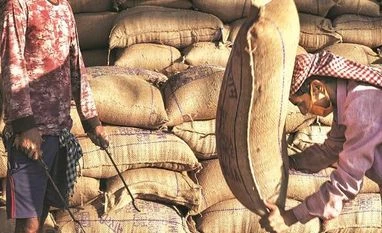 "Punjab follows in Rajasthan's footsteps to blunt Centre's mandi Bills")












