Railways completes pilot project for semi-high-speed train
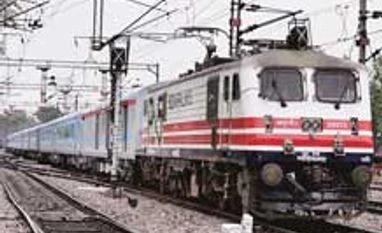
A semi-high-speed New Delhi-Agra test train leaves New Delhi station on Thursday. The train is expected to reach a speed of 160 km/hr
Anusha Soni New Delhi The first pilot project of the Indian Railways to run trains at a maximum speed of 160 km/hr was completed successfully on Thursday morning on the Delhi-Agra route.
The train covered the distance of 200 km in 90 minutes, compared to the earlier 120 minutes. This makes up for a commercial speed of about 133 km/hr compared with the average speed of 90-100km/hr for Rajdhani trains.
Railwaymen were deployed at all level crossings on the route, at every 100 km, to ensure the safety of passengers.
"The pilot has been successful but this project is not just about speed targets on this route. It is also a learning trajectory for the path ahead for high-speed rail. With the data that we have gathered, we will have to analyse for how long we can sustain the speed of 160 km/hr," a senior railway engineer associated with the project told Business Standard.
High-speed trains are usually those that can reach speeds of 300-plus-km/hr.
A team from the Research Design and Standards Organisation will study the findings from the trial run. "There are various critical issues which need to be studied including quality of running, vibration and passenger comfort," said a senior official from the High Speed Rail Corporation.
The railways will undertake the task of completely fencing the Delhi-Agra route within the next three-four months, following which regular services for higher speed trains will open.
Trial runs on two other routes, Delhi-Kanpur and Delhi-Chandigarh, are not due anytime soon as those routes require more preparation in terms of tracks and other related issues.
The new government plans to create a Diamond Quadrilateral connecting the top four cities of India through high-speed corridors. It is expected to cost Rs 12 lakh crore and the government could also look at tapping sovereign wealth funds to raise money. Senior officials also point out that the sprint is a strain on the existing system and each component involved like speed, power, tracks and coaches will have to studied in detail to chalk out the plan ahead.

 "Railways completes pilot project for semi-high-speed train")


 Connect with us on WhatsApp