RBI, govt stand-off is 'not a happy thing at all', says S Gurumurthy

Most of the recent rise in RBI reserves has happened due to appreciation of the dollar
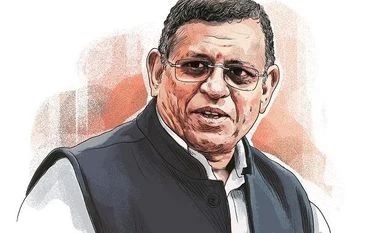
Swaminathan Gurumurthy
Swaminathan Gurumurthy, convenor of Swadeshi Jagran Manch. Illustration: Ajay Mohanty
Abhishek Waghmare New Delhi
Last Updated : Nov 16 2018 | 1:52 AM IST
Ahead of Monday’s important meeting of the Reserve Bank of India (RBI) board, S Gurumurthy, its recently inducted non-official director, said the flow of credit to micro, small and medium enterprises (MSMEs) should be eased to push up growth.

Strict capital adequacy norms in India unnecessarily reduce the flow of credit, he said. The rule in question is meant to provide banks a stable resource to absorb losses from the risk in its business. The Basel norms ask for capital adequacy of 

8 per cent for banks which are internationally active and 4 per cent for those which are not. Yet, said Gurumurthy, despite there being only “four internationally active banks in India”, all banks have been “forced into having 9 per cent capital”.

At the previous RBI board meeting, Gurumurthy is understood to have argued for easing of credit to MSMEs by relaxing the present norms on debt gone bad. Also, that the rule in this regard for placing a bank under ‘Prompt Corrective Action (PCA)’ be revised.

Gurumurthy was speaking on Thursday at an event organised here by Vivekananda International Foundation, a think tank. He is a co-convenor of the Swadeshi Jagran Manch, a body supported by the Rashtriya Swayamsevak Sangh.


From the day (October 26) that RBI Deputy Governor Viral Acharya gave a speech on the importance of independence for central banks, there has been visible disturbance in the formal and informal channels of communication with the central government. Gurumurthy referred to this on Thursday, saying any stand-off between central bank and government “is not a happy thing at all”.

Citing studies by government-appointed committees, he said RBI's reserves do not need to be at their current level of 27-28 per cent of its assets. This assumes importance, since the government is insisting RBI announce a policy on its economic capital framework.

Most of the recent rise in RBI reserves has happened due to appreciation of the dollar, said Gurumurthy. However, he held, it is unlikely that the government is asking RBI for money from the latter's reserves. “As per my understanding, the government is asking for formulation of a policy as to how much of reserves the RBI must have. Most central banks do not have such reserves, except RBI,” he said.

He said the non-performing assets at banks had developed over a period but banks had been forced by RBI to provide for such assets “in one go”, which “created the bank stress”. Adding that former RBI governor Raghuram Rajan had admitted excessive lending took place at that time (the earlier Congress-led government) that later became bad debt.

Gurumurthy proposed that the Fiscal Responsibility and Budget Management Act be amended to make it possible for the government to print money when required. Whether he meant it for liquidity or to finance the fiscal deficit was unclear.

He said the MSME sector suffered the most during both demonetisation and implementation of the goods and services tax (GST). Its present difficulty in obtaining credit was adding to these troubles. This concurs with the finance ministry, whose officials maintain that credit to MSMEs is one of the two top concerns the government has regarding RBI. The second is ensuring liquidity to non-banking financial companies.


Continuing his earlier praise for demonetisation, Gurumurthy said asset prices, especially those of gold and real estate, were rising swiftly before the currency purge. If not for demonetisation, “the economy would have collapsed”, he said.

On the government-RBI stand-off, he said the issue is “not only with RBI but with economists, media and intellectuals because they do not think of alternatives”. Doing so was necessary and “it requires overall correction of the Indian mind”.

What Gurumurthy thinks

  • We are a bank-driven economy and not a market-driven economy
  • There is a complete failure of economic intellectualism in India
  • The Trump phenomenon will last beyond Trump
  • IMF and World Bank have become “distress lending institutions” and are no longer leading monetary institutions

One subscription. Two world-class reads.

Already subscribed? Log in

Subscribe to read the full story →
*Subscribe to Business Standard digital and get complimentary access to The New York Times

Smart Quarterly

₹900

3 Months

₹300/Month

SAVE 25%

Smart Essential

₹2,700

1 Year

₹225/Month

SAVE 46%
*Complimentary New York Times access for the 2nd year will be given after 12 months

Super Saver

₹3,900

2 Years

₹162/Month

Subscribe

Renews automatically, cancel anytime

Here’s what’s included in our digital subscription plans

Exclusive premium stories online

  • Over 30 premium stories daily, handpicked by our editors

Complimentary Access to The New York Times

  • News, Games, Cooking, Audio, Wirecutter & The Athletic

Business Standard Epaper

  • Digital replica of our daily newspaper — with options to read, save, and share

Curated Newsletters

  • Insights on markets, finance, politics, tech, and more delivered to your inbox

Market Analysis & Investment Insights

  • In-depth market analysis & insights with access to The Smart Investor

Archives

  • Repository of articles and publications dating back to 1997

Ad-free Reading

  • Uninterrupted reading experience with no advertisements

Seamless Access Across All Devices

  • Access Business Standard across devices — mobile, tablet, or PC, via web or app

Next Story


