RBI likely to cut rates for sixth time this year, try help growth

RBI has delivered 135 basis points of interest-rate easing this year, but lenders have only transmitted a fraction of that to borrowers.
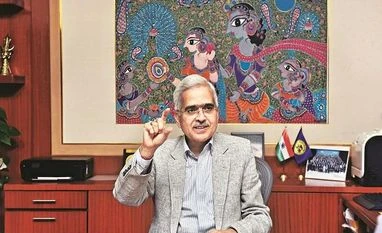
RBI Governor Shaktikanta Das
Anirban Nag | Bloomberg
4 min read Last Updated : Dec 05 2019 | 6:34 AM IST
The Reserve Bank of India is set to deliver its sixth straight interest-rate cut Thursday, shrugging off a spike in inflation as it stays doggedly focused on supporting economic growth.

While all 34 economists surveyed by Bloomberg News as of Wednesday expect a reduction, the majority expect a quarter-point cut, with the rest expecting reductions of 15 basis points to 50 basis points. The RBI has cut borrowing costs by 135 basis points so far in 2019 to a nine-year low of 5.15%.

The meeting of the six-member Monetary Policy Committee led by Governor Shaktikanta Das, who completes one year in office next week, comes amid deepening concerns about growth, financial stability and weak public finances.

The policy decision will be announced at 11:45 a.m. in Mumbai, followed by a press conference 15 minutes later by Das. Here’s a look at what else to watch out for:

Growth trajectory

The RBI has lowered its growth forecast for the current fiscal year four times already, with the latest revision in October pegging expansion at 6.1%. Data since then has shown gross domestic product expansion slowing to 4.5% in the July to September period, the weakest pace in more than six years.

“With no imminent signs of a turnaround, we expect the RBI to cut rates by 25 basis points at its December meeting,” said Teresa John, an economist at Nirmal Bang Equities Pvt. in Mumbai. The July-September period saw economic slack deepen, with manufacturing contracting. A purchasing managers survey indicated that activity in the dominant services industry slowed during that period. With surveys for both manufacturing and services in November pointing to a rebound, it’s worth watching if and by how much the RBI will further lower its growth forecast.

Chart
Flexible inflation

The MPC meets at a time when headline inflation has popped above the RBI’s 4% medium-term target for the first time in more than a year. The acceleration is driven by a spike in food prices, although underlying price pressures -- which strips out volatile food and fuel prices -- are benign.

The rate-setting panel is likely to latch on to the subdued core inflation to vote for a rate cut and keep the outlook accommodative. Nevertheless, the central bank may revise upwards its inflation forecast for the fiscal year to March, indicating that room for further easing is closing.

The headline inflation forecasts are likely to stay within the RBI’s wider band of 2%-6%.

“The December policy will, in some sense, test the ‘flexible’ portion of the flexible inflation-targeting framework,” said Suvodeep Rakshit, senior economist at Kotak  
Institutional Equities in Mumbai. “Given the transient nature of food prices, and the sustained decline in core inflation, the MPC will likely continue to focus on the output gap and growth outlook.”

Chart

Financial conditions
 
While the RBI has delivered 135 basis points of interest-rate easing this year, lenders have only transmitted a fraction of that to borrowers. As such, the spread between the central bank’s key policy rate and the weighted average lending rate on outstanding loans from commercial banks is the highest in data going back to February 2012.

Demand for loans has slowed and that reflects tight domestic credit conditions amid what Sonal Varma, chief economist for India and Asia, ex-Japan, at Nomura Holdings Inc., describes as a “triple balance sheet impairment of corporates, banks and shadow banks.”

Companies are using money to repay loans instead of investing, banks are exercising caution in lending, fearing a bad loan pile up, while the shadow banking sector is grappling with a crisis that has seen defaults rise.

“We expect incrementally the focus to now shift to government measures on specific sectors and to revitalize the financial sector,” Varma said.

(With assistance from Tomoko Sato.)


Chart


One subscription. Two world-class reads.

Already subscribed? Log in

Subscribe to read the full story →
*Subscribe to Business Standard digital and get complimentary access to The New York Times

Smart Quarterly

₹900

3 Months

₹300/Month

SAVE 25%

Smart Essential

₹2,700

1 Year

₹225/Month

SAVE 46%
*Complimentary New York Times access for the 2nd year will be given after 12 months

Super Saver

₹3,900

2 Years

₹162/Month

Subscribe

Renews automatically, cancel anytime

Here’s what’s included in our digital subscription plans

Exclusive premium stories online

  • Over 30 premium stories daily, handpicked by our editors

Complimentary Access to The New York Times

  • News, Games, Cooking, Audio, Wirecutter & The Athletic

Business Standard Epaper

  • Digital replica of our daily newspaper — with options to read, save, and share

Curated Newsletters

  • Insights on markets, finance, politics, tech, and more delivered to your inbox

Market Analysis & Investment Insights

  • In-depth market analysis & insights with access to The Smart Investor

Archives

  • Repository of articles and publications dating back to 1997

Ad-free Reading

  • Uninterrupted reading experience with no advertisements

Seamless Access Across All Devices

  • Access Business Standard across devices — mobile, tablet, or PC, via web or app

Topics :India economyShaktikanta DasRBI monetary policyRBI rate cutRBI interest rates

Next Story



