The Reserve Bank of India (RBI) has received an encouraging response from countries to take part in rupee-based trading and the Asian Clearing Union is exploring a scheme to use domestic currencies for settlement, Deputy Governor T. Rabi Sankar said.
“An arrangement, bilateral or among trading blocs, which offers importers of each country the choice to pay in domestic currency is likely to be favoured by all countries, and therefore, is worth exploring,” Sankar said at the Annual Day event of the Foreign Exchange Dealers Association of India at Mumbai.
Sankar delivered his speech in the context of the progress made with the internationalisation of the rupee and the progress made on that front. The rupee is partially convertible, implying that there are certain caps on overseas investment into Indian markets.
The central banker’s comments come at a time when a global rush of investment towards the US dollar, the world’s reserve currency, has led to sharp depreciation in the rupee. The domestic currency has depreciated 10 per cent versus the US dollar so far in 2022.
While initial steps such as enabling external commercial borrowings by companies, particularly through rupee-denominated or ‘masala’ bonds have already been taken, the RBI’s decision in July to permit a wider scope of rupee settlement for external trade has led to a more comprehensive framework.
Prior to the RBI’s step in July, invoicing export and import in rupees was restricted to only a few uses, Sankar said.
“As increased use of Rupee in cross-border transactions requires a unified global market in Rupee both in interest rates and currencies. Such unification would not only improve depth and liquidity of our markets, but they would also facilitate uniform pricing across borders,” he said.
Sankar listed out other recent steps taken by the RBI to move towards internationalisation of the rupee including the linking of domestic interest rate and currency markets with offshore rupee markets and the decision to permit primary dealers to act as market makers in foreign exchange markets.
“A desirable outcome would be if market-makers like banks and PDs centralize their global Rupee book in India. Among other benefits, this would improve risk management for Indian and global firms alike and enhance the global role for India’s financial sector,” he said.
Of late, the rupee’s weakness against the dollar had been aggravated due to the existence of an arbitrage opportunity stemming from different levels for the dollar/rupee pair in onshore and offshore markets. Sankar’s speech also comes at a time when the RBI’s foreign exchange reserves have declined sharply – the reserves have fallen more than $100 billion since the Ukraine war.
Sankar emphasised that greater international acceptance of the rupee would reduce the need for holding foreign exchange reserves.
“While reserves help manage exchange rate volatility and project external stability, they impose a cost on the economy. For example, there is a general agreement that India’s reserves are borrowed funds. Banks and corporate incur external debt at market rates which are then invested in Government securities issued by advanced economies (AEs),” he said.
“The rate at which external debt is incurred is substantially higher than the return on reserves,. Assuming an interest differential of 2%, on a Reserve base of say USD 600 billion, the cost of reserves would work out to USD 12 billion, annually,” he said.
Among the advantages of an internationalised rupee are the reduced currency risks for domestic businesses using cross-border transactions and a lower vulnerability of the country to external shocks, Sankar said.
Listing out preconditions such as size of the economy, share of global GDP and extraordinary military capabilities, Sankar said that obtaining the status of an international currency like the US dollar lies well in the future. “But the direction is clear,” he said.

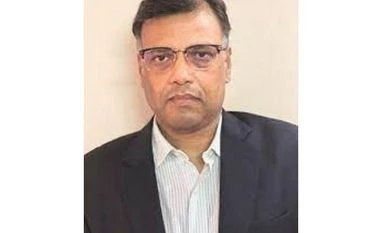 "RBI received good response from countries for rupee trade: T Rabi Sankar")












 Connect with us on WhatsApp