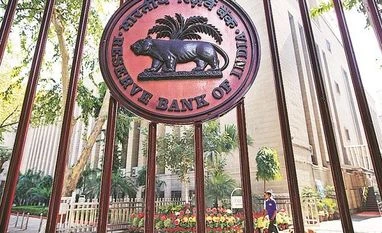
A rate cut is almost certain in the upcoming monetary policy review on December 5, for a six-year-low growth rate of 4.5 per cent in the September quarter necessitates a larger dose of monetary and fiscal policy measures, a poll by Business Standard of 15 economists and bank treasurers has found.
The rate cut could be 15 basis points (bps), making the policy repo rate a standard 5 per cent, or it could be 25 bps. But the central bank will face a technical challenge there. Inflation, which has spiked owing to high vegetable prices, is likely to cross 5 per cent in November. The policy rate being at 5 per cent or less will mean that the interest rate will be lower than the inflation rate.
Since February, the monetary policy committee (MPC) led by Reserve Bank of India (RBI) Governor Shaktikanta Das has lowered the repo rate five times by a cumulative 135 bps, and has promised to continue with an accommodative stance as long as “it is necessary to revive growth, while ensuring that inflation remains within the target”. But the efficacy of the past rate cuts by the central bank in an environment of demand collapse can be debated.
Even as market rates have fully reflected the rate cuts, companies are not necessarily in the mood for borrowing, as they face a slump in consumption demand and investment in the country. Household savings cannot fully support the combined fiscal deficit of the government and public sector enterprises, Ananth Narayan, associate professor of S P Jain Institute of Management & Research wrote in his column for Business Standard.
According to Narayan, the official combined fiscal deficit of central and state governments was 5.9 per cent of gross domestic product (GDP) in FY19, while the governments and public sector enterprises borrowed an estimated 9.7 per cent of GDP, the highest for this decade.
“The RBI cannot be doing the heavy lifting alone. We cannot have a situation where inflation is higher than the repo rate and the real interest rate turns zero or even negative,” said a senior economist, requesting anonymity.
But heavy rate cuts could also lead to some deep fundamental problems. “The jump in private final consumption expenditure in the latest GDP print could indicate a trend towards debt-financed consumption with a jump in household leverage. Also, nominal GDP growth being lower than interest rates could be a sign of a debt build-up. We, thus, need an active fiscal policy as a counter cyclical stabiliser rather than perpetuating rate cuts, which might create financial instability,” said Soumyakanti Ghosh, group chief economic advisor of State Bank of India. Axis Bank Chief Economist Saugata Bhattacharya expects the upcoming consumer price index (CPI) inflation at 5.4 per cent, though he says the central bank may would want to pare the policy rate by 25 bps.
“With growth well below potential, the MPC will maintain its focus on countering the cyclical slowdown. While the headline inflation has crossed over the target and is expected to stay elevated, it is mainly due to transitory inflationary pressures,” said Gaurav Kapur, chief economist of IndusInd Bank. “The mandate of the MPC allows it flexibility on headline inflation in such a scenario. Core inflation remains well below 4 per cent on weak demand and that should provide confidence to the MPC on achieving the headline target,” Kapur said.
There should be more rate cuts in the coming months.
A similar opinion is held by Indranil Pan, chief economist of IDFC First Bank. “The negative output gap continues to widen, as evidenced in core inflation falling, and incremental data continuing to fail to provide any signs of green shoots. In this context, rising food prices will probably be ignored for the moment with hopes that the current price rise is due to supply shortage and will likely correct as fresh winter crop come to the market,” Pan said.
A 25-bp rate cut now leaves the scope for further action that might be warranted, said Abheek Barua, chief economist of HDFC Bank. The emphasis this time would be more on transmission, Barua said.
“Lower growth and a slowdown in aggregate demand will lead to more policy accommodations,” said B Prasanna, head of global markets for ICICI Bank.
The MPC should ideally pause now, said Rupa Rege Nitsure, chief economist of L&T Finance Group, but “they would likely cut the repo rate by 15 bps". The MPC should also pause for the remaining part of this fiscal year, but “they will cut repo one more time in Q4FY20”, Nitsure said.
CPI inflation projection could be raised, while GDP projection could be lowered from 6.1 per cent to 5.6 per cent for FY20, Nitsure said.
“We believe that there should be a pause, given that part cuts have to still work their way. Also inflation is up and will be in 5 per cent range for two months. However, given part response from the MPC and the fact growth is sluggish, a 25-bp cut may be expected,” said Madan Sabnavis, chief economist of CARE Ratings.
“Growth has slowed to 4.5 per cent led by a drop in investment spending. Private capex is extremely weak. Lower real rates will help in reviving corporate capex, though with a lag. Hence, another 25-bp rate cut along with focus on transmission is what we expect in December policy,” said Sameer Narang, chief economist of Bank of Baroda.
A 25-bp cut now, with a cumulative 50-bp cut, could be the space left in the current policy cycle, said Upasna Bhardwaj, chief economist of Kotak Mahindra Bank.
“Growth concerns are becoming increasingly entrenched and in the absence of any extra stimulus we see limited room for an immediate revival,” Bhardwaj said.
As far as the bond market is concerned, the transmission has been good, and will continue to remain so.
“Rate transmission has been quite satisfactory as indicated by the money market spreads. The long-term spreads are at an elevated level, largely because of the long-term growth and inflation dynamics. The bank lending rates should come down tracking market liquidity, anaemic demand for credit and rates on the certificate of deposits. Against this backdrop, a sentiment supportive 15-bp cut augers well,” said Soumyajit Niyogi, associate director at India Ratings and Research.