RBI urges govt to expedite reforms for twin balance sheet problem

The central bank seemed keen to extend the circular to non-banking financial companies (NBFC) as well
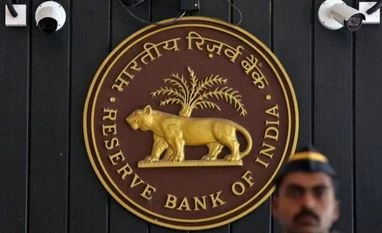
Reserve Bank of India
FILE PHOTO: A security personnel member stands guard at the entrance of the Reserve Bank of India (RBI) headquarters in Mumbai | Photo: Reuters
Advait Rao PalepuAnup Roy Mumbai
Last Updated : Aug 30 2018 | 5:30 AM IST
The Reserve Bank of India (RBI) wants the government to intensify its structural reforms to address the twin balance sheet stress as well as issues relating to taxation, agriculture, and foreign direct investment, which the central bank expects will finance the country’s current account deficit in the coming days.

The RBI recently received a shot in the arm after the Allahabad High Court refused to grant relief to stressed power assets with regard to its February 12 circular, which mandated banks to drag a non-performing asset for bankruptcy proceedings if it remains unresolved for more than 180 days.

The central bank seemed keen to extend the circular to non-banking financial companies (NBFC) as well. While this may signal intent of the RBI to continue reforms in all bodies regulated by the RBI, senior officials of some NBFCs said the harmonised rules, which get rid of old modes of resolution and tie the whole process within a timeframe, don’t change life for NBFCs. NBFCs, being a smaller player in a consortium, become party to any resolution plan that banks initiate.

“We already follow all norms of banks. The rules being extended to us doesn’t change our lives,” said a senior executive of a large asset-financing NBFC. The central bank sounded determined to address the stressed assets issue, and urged the government to continue with its next level of reforms. “The stage is set for the intensification of structural reforms that will unlock new growth energies and place the Indian economy on a sustainable trajectory of higher growth. Resolute progress in repairing and resolving the acute stress in the banking system and in shoring up corporate debt will re-intermediate financial flows for productive purposes, which are essential for sustaining an acceleration in growth with macroeconomic and financial stability,” the RBI said in its annual report. The RBI said credit disbursals would increase as the Insolvency and Bankruptcy Code as a mechanism would resolve stress on corporate and bank balance sheets. 

Further, given the negative credit-to-GDP gap, there is sufficient scope for credit absorption and expansion in bank lending. Banks, meanwhile, are not able to pass on lending rate benefit to their customers due to bad debts in their books and also because of risk aversion.

The RBI’s annual report exuded confidence in manufacturing activities picking up, since last year, with an uptick in capacity utilisation and a slow return of pricing power for domestic firms. This, the RBI said, was creating the grounds for a revival in capital expenditure (capex) cycle.

The main contributors to manufacturing growth are construction, coal-mining, fertiliser, and cement sectors. Further, infrastructure projects will boost growth given the government’s push in affordable housing, roads, and port projects, it said.

“Infrastructure holds the key to unleashing the impulses of faster growth and sustaining the momentum of growth will hinge around its inclusiveness and, in particular, its employment intensity,” notes the report.

However, demand and investment remain subdued.

“Consistent with expectations, policy uncertainties and bottlenecks (represented by stalled projects) have contributed to dampening of the investment climate,” the report said.

Aggregate demand decelerated as consumption by both private sector and government slowed down. Gross fixed capital formation fell from 43.2 per cent of GDP growth in 2016-17 to 35.6 per cent of GDP growth in 2017-18. While the investment rate grew to 34.1 per cent of GDP in 2017-18, up from 33.2 per cent in 2016-17. The economy, though, remains resilient in the face of shocks like demonetisation, GST, global sell-offs in bonds and equities, capital outflows, rising loan delinquencies in banks as well as financial frauds at domestic banks, the annual report noted.

Inflation continues to remain a concern for the central bank, that has a legislative mandate to keep it under control.

“The current inflation outlook is clouded by several uncertainties,” the RBI said. The staggered impact of house rent allowance increases by various state governments, may push up headline inflation in 2018-19, and potentially induce second-round effects. The global growth picks up or geopolitical risks may exert further pressures on crude and commodity prices. And the minimum support prices for kharif crops could also exert some pressure on prices. Global financial market volatility also may add to prices, the RBI noted.

“Finally, the strengthening of the growth momentum could also exert demand pull pressures, unless the supply response is proportionate and timely,” the report said.

The annual report raised concerns over the fiscal position of state governments and of the Central government which has deteriorated over the last year, “due to subdued growth in revenues and elevated revenue expenditure.”

The combined gross fiscal deficit of the centre and states is estimated to be 5.9 per cent of GDP in 2018-19 as against 6.6 per cent in the revised estimates for 2017-18.

The central bank said it aims to carry out liquidity management operations effectively in line with the stance of monetary policy. And it will continue to conduct foreign exchange operations, “including interventions, in an effective manner to curb undue volatility in the exchange rate.”

One subscription. Two world-class reads.

Already subscribed? Log in

Subscribe to read the full story →
*Subscribe to Business Standard digital and get complimentary access to The New York Times

Smart Quarterly

₹900

3 Months

₹300/Month

SAVE 25%

Smart Essential

₹2,700

1 Year

₹225/Month

SAVE 46%
*Complimentary New York Times access for the 2nd year will be given after 12 months

Super Saver

₹3,900

2 Years

₹162/Month

Subscribe

Renews automatically, cancel anytime

Here’s what’s included in our digital subscription plans

Exclusive premium stories online

  • Over 30 premium stories daily, handpicked by our editors

Complimentary Access to The New York Times

  • News, Games, Cooking, Audio, Wirecutter & The Athletic

Business Standard Epaper

  • Digital replica of our daily newspaper — with options to read, save, and share

Curated Newsletters

  • Insights on markets, finance, politics, tech, and more delivered to your inbox

Market Analysis & Investment Insights

  • In-depth market analysis & insights with access to The Smart Investor

Archives

  • Repository of articles and publications dating back to 1997

Ad-free Reading

  • Uninterrupted reading experience with no advertisements

Seamless Access Across All Devices

  • Access Business Standard across devices — mobile, tablet, or PC, via web or app

Next Story



