Will watch monsoon before cut: Rajan
Transmission by banks to also be monitored before deciding on rates. Banks have passed on only 70 bps against RBI's front-loaded rate easing exercise
Anup Roy Mumbai Reserve Bank of India (RBI) Governor Raghuram Rajan has reiterated that future rate cuts will depend on a moderation in price rises and a good monsoon.
“We’re looking at inflation,” he said in an interview to The Wall Street Journal. “If it continues on a downward path, that would create room.”
Rajan and Union Finance Minister Arun Jaitley are currently in Washington for the spring meeting of the International Monetary Fund and the World Bank.
Going by the latest trend of inflation, Rajan may well worry less on prices. The central bank’s inflation-focused agenda has worked well for the economy as this has fallen steadily in recent months. Retail inflation fell to 4.83 per cent in March, from 5.26 per cent a month ago. Food inflation fell to 5.21 per cent from 5.3 per cent. RBI plans to keep inflation within five per cent by January 2017 and about four per cent thereafter.
After reducing policy rates by 25 basis points (bps) in its first bi-monthly monetary policy for 2016-17 on April 5, RBI said it would wait for a proper transmission of the cumulative 150-bp rate cuts.
In his policy statement, Rajan said “monetary stance remains accommodative”.
However, the central bank would assess the situation before further cuts, Rajan had said in an interaction with select reporters after the policy.
Transmission by banks would also be critically monitored before deciding on rates. Banks have passed about 70 basis points so far.
The policy statement also said an erratic monsoon would chip off some of the growth prospects of the economy.
“We’re looking for signs of a good monsoon. Unfortunately, India is still somewhat sensitive to monsoons, though people find it hard to see a link between monsoons and food prices. But there is potentially, with this being the third bad monsoon in a row (if) that happens,” Rajan said in the interview.
A bad monsoon would push up the prices of food and impact the real economy in several ways. This makes future rate cuts impossible, even as rural demand would be suppressed further.
Most economists feel the RBI has room for a 25-basis point cut, having met inflation targets comfortably.
In the interview with the US financial daily, Rajan said India did well in narrowing its current and fiscal account deficits, giving the economy more flexibility to weather potential turbulences.

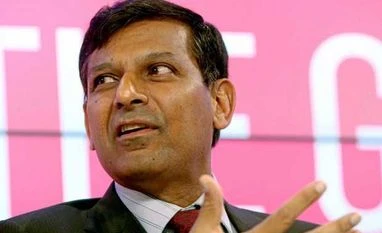 "Will watch monsoon before cut: Rajan")


 Connect with us on WhatsApp