Reducing deficits, reviving growth priorities: Rajan
BS Reporter New Delhi
Chief Economic Advisor Raghuram Rajan on Friday said reducing the government’s fiscal and current account deficits and restarting stalled projects to revive growth were the government’s priorities. “The government is well aware that we need to address three or four issues. First, we have to get growth started again; we need to stabilise growth, which has declined in recent years. There is need to restart stalled projects,” Rajan said at the Citi-MIT Sloan Symposium on Friday.
He said the country’s fiscal deficit was too high to be financed through market borrowings and there was a need to stick to the path of fiscal consolidation by reducing the government’s consumption expenditure. “You can’t keep running a large fiscal deficit and (then) borrow to finance it. The finance minister has made a firm commitment this year’s fiscal deficit would be 5.3 per cent and next year, it would be 4.8 per cent. We have to stick to this and we have the intent to do it,” Rajan said.
At 5.9 per cent of gross domestic product (GDP), last year’s fiscal deficit had overshot the Budget estimate of 4.6 per cent. Rating agencies have threatened to downgrade India in case there is no fiscal discipline.
Rajan said the large current account deficit was an area of concern. In the quarter ended September, the current account deficit stood at a record 5.4 per cent of GDP. The government is worried next financial year, too, it might remain high. To narrow the deficit, the government is considering foreign capital flows. It has already increased import duty on gold to prevent capital outflows. Analysts said the issues raised by Rajan would be important inputs for preparing the Budget.
Rajan said though it was possible to record growth despite some corruption, a high level of corruption made growth difficult. He said there were very few countries with no corruption. He, however, clarified he wasn’t justifying any level of corruption, adding it should be reduced as far as possible.
“The current debate on corruption in the country can be seen as a cup half full, rather than half empty. Our institutions are taking notice; they are paying attention. CAG (Comptroller and Auditor General) is asking the right questions. CVC (Central Vigilance Commission) is asking questions. The Supreme Court is asking questions. That is forcing a change in institutions…What has happened is as growth has picked up, the opportunity to become corrupt has increased,” he said. Rajan also stressed the need for making the business environment friendlier for investors. But, he cautioned it shouldn’t become so comfortable that companies stopped growing. “We have to create a macroeconomic environment in which people can grow. The larger the firm, the more productive it is. We are not allowing them to become bigger. We need to encourage more small enterprises. Growth is a means to an end, not an end in itself,” he said.

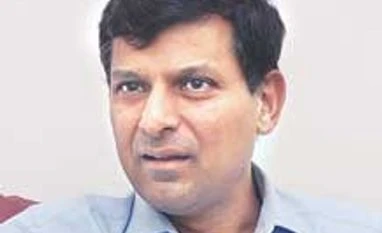 "Reducing deficits, reviving growth priorities: Rajan")


 Connect with us on WhatsApp