Reserve Bank of India grants licence to NARCL under Sarfaesi Act

The NARCL has been incorporated under the Companies Act, and public sector banks will hold 51 per cent in the bad bank
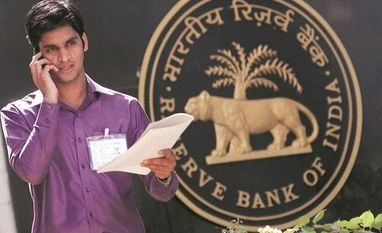
RBI, reserve bank of india
Reserve Bank of India
Nikunj Ohri New Delhi
2 min read Last Updated : Oct 05 2021 | 1:19 AM IST
The Reserve Bank of India (RBI) has granted the National Asset Reconstruction Company (NARCL), which is seeking to turn around bad loans worth Rs 2 trillion, the licence to register as an asset reconstruction company (ARC). 

The licence to NARCL, dubbed as bad bank, was granted by the central bank on Monday, said an official. The approval to the entity has been accorded under Section 3 of the Securitisation and Reconstruction of Financial Assets and Enforcement of Security Interest (SARFAESI) Act 2002.

Section 3 of SARFAESI Act states that an entity cannot start the business of securitisation or asset reconstruction without obtaining a certificate of registration, and should have funds of at least Rs 2 crore or an amount not exceeding 15 per cent of the total financial assets acquired or to be acquired by the ARC.

State-owned lenders State Bank of India (SBI), Union Bank of India, Punjab National Bank (PNB) and Indian Bank have picked up over 12 per cent stake each in NARCL. SBI, Union Bank of India and Indian Bank have picked up 13.27 per cent stake each in NARCL, while PNB has bought 12.06 per cent. 

The NARCL has been incorporated under the Companies Act, and public sector banks will hold 51 per cent in the bad bank. The remaining will be held by private banks and financial institutions.

About 16 public and private sector banks have put in Rs 5,000-6,000 crore in the bad bank. That will be utilised by it to pay 15 per cent cash to the lenders while purchasing their bad loans. The remaining 85 per cent will be paid through security receipts guaranteed by the government. 

The newly formed NARCL expects to recover between Rs 50,000 crore and Rs 64,000 crore through the resolution of bad loans worth Rs 2 trillion.

One subscription. Two world-class reads.

Already subscribed? Log in

Subscribe to read the full story →
*Subscribe to Business Standard digital and get complimentary access to The New York Times

Smart Quarterly

₹900

3 Months

₹300/Month

SAVE 25%

Smart Essential

₹2,700

1 Year

₹225/Month

SAVE 46%
*Complimentary New York Times access for the 2nd year will be given after 12 months

Super Saver

₹3,900

2 Years

₹162/Month

Subscribe

Renews automatically, cancel anytime

Here’s what’s included in our digital subscription plans

Exclusive premium stories online

  • Over 30 premium stories daily, handpicked by our editors

Complimentary Access to The New York Times

  • News, Games, Cooking, Audio, Wirecutter & The Athletic

Business Standard Epaper

  • Digital replica of our daily newspaper — with options to read, save, and share

Curated Newsletters

  • Insights on markets, finance, politics, tech, and more delivered to your inbox

Market Analysis & Investment Insights

  • In-depth market analysis & insights with access to The Smart Investor

Archives

  • Repository of articles and publications dating back to 1997

Ad-free Reading

  • Uninterrupted reading experience with no advertisements

Seamless Access Across All Devices

  • Access Business Standard across devices — mobile, tablet, or PC, via web or app

Topics :Reserve Bank of IndiaRBISarfaesi ActStressed assets

Next Story


