
Rooftop solar projects need additional $50 billion to meet 40 GW by 2022 target: Report
India plans to generate 175 GW of electricity from renewable energy sources by 2022 requiring an investment of nearly $100 bn
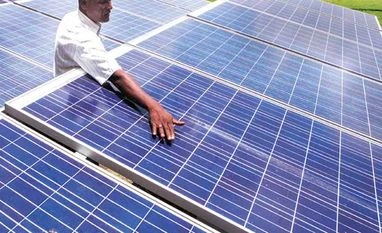 "Rooftop solar projects need additional $50 billion to meet 40 GW by 2022 target: Report")
WebinarsNew
Deep DiveNew
Explore Business Standard
India plans to generate 175 GW of electricity from renewable energy sources by 2022 requiring an investment of nearly $100 bn
In order to meet its target of generating 40 GW or 40,000 MW of solar power by 2022, India would require an additional investment of $ 50 billion, a report by Bloomberg New Energy Finance said on Tuesday.
India plans to generate 175 GW of electricity from renewable energy sources by 2022 requiring an investment of nearly $100 bn. The small and rooftop solar sector will need another $50 bn to meet its own 40GW by 2022 target.
The reporter observed that rooftop solar in particular has become the fastest growing renewable power sub-segment in India's clean energy market.
In terms of policy support for the rooftop solar segment, most states have recently introduced net-metering regimes and are supporting the roll-out of projects. These will likely carry the market forward in the immediate future, although it may not be enough to expand into the still dormant residential market.
The rooftop solar industry in India is primarily divided into two models — captive ownership where the consumer owns the PV (photovoltaic) system and the remaining projects are being built and financed by the renewable energy services companies (resco) or third-party investors.
Rooftop segment is buoyed by favourable economics due to high power tariffs and cash availability. Financing is arranged either through their balance sheets or through their existing banks.
"We estimate that $610 million was invested in rooftop solar segment across the country between FY2013 and FY2016, but the lack of financing for resco projects raises concern as it is a dominant part of other major solar markets. This is a big drawback for a sector that needs almost $50 bn of capital to meet the ambitious government goals," the report said.
Various international agencies are committing new funding for the small solar segment to their partner banks or non-banking financial companies in India but quick loan disbursement still remains a challenge, it added.
The following steps can go a long way towards ensuring further growth in the sector: educating loan disbursement agencies and creating standardised loan application review processes, establishing and propagating norms for quality control of products, creating intermediation platforms to raise awareness and reduce transaction costs, and time-bound clearance of subsidy applications.
Smart grids, which allow for two-way flow of power, upgraded transformers that can take the added rooftop capacity and smart metering technology with proper IT infrastructure are needed to make rooftop addition to the existing grid easy and enabling, the report further added.
First Published: Nov 01 2016 | 5:34 PM IST


 Connect with us on WhatsApp