Rupee at 2-year high of 63.60: Why did it surge and what's next?

Rupee has strengthened 6.21% against the greenback, year till date as FPIs have been pouring in money
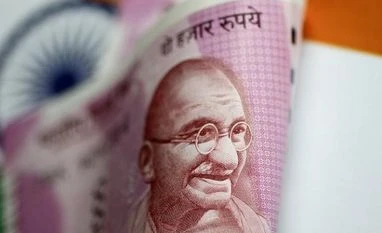
Rupees
An India Rupee note is seen in this illustration photo June 1, 2017. Photo: Reuters/Thomas White/Illustration/Files
Abhishek Goenka
Last Updated : Aug 03 2017 | 9:20 AM IST
The Rupee finally broke through the key psychological level of 64 after spending a good four months in the 64-65 range. The rupee made a low of 63.60 on Wednesday, a level not seen since July 2015. Despite a muted reaction in the equity and bond markets the rupee strengthened as the market was eyeing 64 as the key support level and huge stops were triggered as that level broke. Rupee has strengthened 6.21% against the greenback, year till date as FPIs have been pouring in money into Indian equity and debt markets in search of yields. Low inflation in the US and inability of Trump administration to push through anticipated fiscal reforms has caused the US yields to drop and US Dollar to underperform.

While stronger Rupee would keep imported inflation under check, any relative outperformance from here on, on a trade-weighted basis would hurt export competitiveness. Currencies like the Chinese Yuan, Indonesian Rupiah, Philippine Peso have strengthened much less in comparison to the Rupee. The central bank thus far has allowed the Rupee to appreciate broadly in line with other Asian and emerging market currencies by absorbing Dollar inflows. By doing so its FX reserves have swelled to USD 390Bn. Going forward, the central bank is likely to continue to manage the Rupee on a trade-weighted basis as it would be mindful of Indian exports becoming uncompetitive and domestic producers suffering on account of cheap imports. If and only if broader USD weakness continues, Rupee could continue to appreciate towards 63.00 in the medium term. The factors that could cause the USD weakness to reverse would be passage of fiscal reforms in US and/or a pick up in inflation and wages in the US or escalation of geopolitical tensions. A hawkish Fed and higher US rates could cause the liquidity tide to reverse resulting in hot money flowing out of EM assets. 

On the domestic front, several big ticket IPOs are queued up and inflows into equities (primary market as well as secondary market) could continue to remain robust if global risk sentiment remains positive. India is being viewed as a preferred investment destination on account of macroeconomic reforms such as demonetization and implementation of GST. Despite the rate cut, Indian bonds offer an attractive yield pick up for FPIs especially with the Rupee being stable since most positions remain unhedged. It would help to track the onshore-offshore (NDF) forward point differential to get a sense of risk sentiment among FPIs. The greater the spread, the more content the FPIs are selling the USD/INR pair for carry. Its best to be short USD/INR for exporters for long term and earn carry - the strategy seems to pay off last 4-5 years. Only if we see a close above 64.40 we can assume a reversal in the rupee. A note of caution being that August has historically been a month when Rupee tends to depreciate. It will be interesting to see if that seasonality plays out this time as well.


Abhishek Goenka is CEO, IFA Global

One subscription. Two world-class reads.

Already subscribed? Log in

Subscribe to read the full story →
*Subscribe to Business Standard digital and get complimentary access to The New York Times

Smart Quarterly

₹900

3 Months

₹300/Month

SAVE 25%

Smart Essential

₹2,700

1 Year

₹225/Month

SAVE 46%
*Complimentary New York Times access for the 2nd year will be given after 12 months

Super Saver

₹3,900

2 Years

₹162/Month

Subscribe

Renews automatically, cancel anytime

Here’s what’s included in our digital subscription plans

Exclusive premium stories online

  • Over 30 premium stories daily, handpicked by our editors

Complimentary Access to The New York Times

  • News, Games, Cooking, Audio, Wirecutter & The Athletic

Business Standard Epaper

  • Digital replica of our daily newspaper — with options to read, save, and share

Curated Newsletters

  • Insights on markets, finance, politics, tech, and more delivered to your inbox

Market Analysis & Investment Insights

  • In-depth market analysis & insights with access to The Smart Investor

Archives

  • Repository of articles and publications dating back to 1997

Ad-free Reading

  • Uninterrupted reading experience with no advertisements

Seamless Access Across All Devices

  • Access Business Standard across devices — mobile, tablet, or PC, via web or app

Next Story


