Second Covid wave threatens India's long-term credit rating, warns Moody's

The financial sector could become the main driver of potential risk to the sovereign
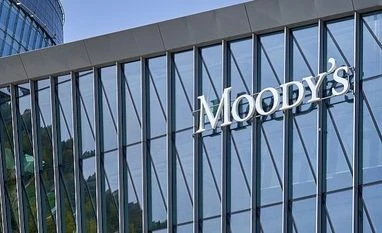
Moody's
Photo: Shutterstock
Anup Roy Mumbai
4 min read Last Updated : Jun 02 2021 | 12:17 AM IST
Global rating agency Moody’s has said that even as the Indian economy has rebounded quickly from a steep contraction in 2020, the second wave of the pandemic poses a threat for the sovereign rating.

The main risk will come from the financial sector, the rating agency warned on Tuesday.  

“A severe second wave of the coronavirus has increased risks to the outlook with potential longer-term credit implications. Risks to India's credit profile, including a persistent slowdown in growth, weak government finances and rising financial sector risks, have been exacerbated by the shock," Moody's said at a frequently asked question (FAQ) update.  

The rating agency has a Baa3 (negative) rating for India, which is the lowest investment grade in its rating scale.

The financial sector is turning risky after the pandemic.

“India’s financial sector is the main driver of potential event risk to the sovereign. Whether the feedback loop between the real economy and the financial sector settles in a credit-supportive or credit-hindering mode will shape India's credit profile,” the rating agency said.

So far, the second wave has increased financial risks to households and small businesses, which may hurt bank profitability, it said, adding, “new loan forbearance and liquidity measures by the central bank, and government plans to set up an asset reconstruction company to take over stressed loans, along with modest recapitalization of public sector banks, will mitigate, but not eliminate, sector risks.”


The reimposition of lockdown measures along with behavioural changes on fear of contagion will curb economic activity, but the impact may not be as severe as the first wave, Moody’s said.

The rating agency expects a decline in economic activity in the first quarter ended June, followed by a rebound, “resulting in real, inflation-adjusted GDP growth of 9.3 per cent in the fiscal year ending March 2022 (fiscal 2021) and 7.9% in fiscal 2022,” it said. Before the pandemic, Moody’s was expecting 10 per cent growth for fiscal 2023.  

The pandemic, however, “will leave new economic scars and deepen pre-pandemic constraints.”

India’s growth potential gets constrained by structural inefficiencies and limits its resilience to shocks, it said. This is because India’s per capita income of around $6,500 on a purchasing power parity basis in 2020 continues to remain far below then Baa-rated median of around $25,200. In the near term, also, job losses and business closures from lockdowns during two separate virus waves have damaged the income and savings of those who are unable to work from home. A vast majority of jobs in India are with micro, small and medium enterprises (MSMEs), and in informal sectors, due to which households have been hit badly due to the lockdowns.  

“If implemented effectively, government reforms that target these challenges would be credit positive. However, the relatively low effectiveness of previous reforms informs our medium- to long-term growth view. Over the longer term, we expect real GDP growth to average around 6 per cent,” the rating agency said.

The rating agency expects the general government deficit (centre plus state deficits) to be at 11.8 per cent of the gross domestic product (GDP), provided there is a “small shortfall in budgeted revenue and a redirection of spending toward the response to the pandemic.” In such a scenario, the general government debt burden will be 90.3 per cent of GDP in fiscal 2021.  

“Debt-to-GDP will edge up to 92.0 per cent by fiscal 2023, largely driven by relatively slow economic growth.”

The rating agency harped on the importance of ramping up the vaccination drive, as potential subsequent waves of infections add risk to the forecasts.

"The government's ability to limit the spread of the virus and materially increase the rate of vaccinations will have a direct impact on the trajectory of both health and economic outcomes.”

As of late May, only around 15 per cent of the country's population had received at least one dose of the vaccine as a shortage of vaccines and the ability to reach rural populations have complicated the vaccine rollout.

However, as the international community has also chipped in, Moody’s expect the pace of vaccinations to pick up this summer, with substantial progress by the end of 2021. 

One subscription. Two world-class reads.

Already subscribed? Log in

Subscribe to read the full story →
*Subscribe to Business Standard digital and get complimentary access to The New York Times

Smart Quarterly

₹900

3 Months

₹300/Month

SAVE 25%

Smart Essential

₹2,700

1 Year

₹225/Month

SAVE 46%
*Complimentary New York Times access for the 2nd year will be given after 12 months

Super Saver

₹3,900

2 Years

₹162/Month

Subscribe

Renews automatically, cancel anytime

Here’s what’s included in our digital subscription plans

Exclusive premium stories online

  • Over 30 premium stories daily, handpicked by our editors

Complimentary Access to The New York Times

  • News, Games, Cooking, Audio, Wirecutter & The Athletic

Business Standard Epaper

  • Digital replica of our daily newspaper — with options to read, save, and share

Curated Newsletters

  • Insights on markets, finance, politics, tech, and more delivered to your inbox

Market Analysis & Investment Insights

  • In-depth market analysis & insights with access to The Smart Investor

Archives

  • Repository of articles and publications dating back to 1997

Ad-free Reading

  • Uninterrupted reading experience with no advertisements

Seamless Access Across All Devices

  • Access Business Standard across devices — mobile, tablet, or PC, via web or app

Topics :CoronavirusMoody’scredit ratingIndian Economy

Next Story



