US bank crisis will have little impact on India: CEA V Anantha Nageswaran

Says lessons for India have not changed, banking sector should remain mindful of duration risk and credit risk, which then includes concentration risk
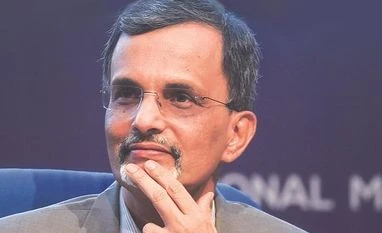
Chief Economic Adviser V Anantha Nageswaran
V Anantha Nageswaran, Chief Economic Adviser
Arup Roychoudhury New Delhi
4 min read Last Updated : Mar 20 2023 | 10:35 PM IST
The impact of the current global financial crisis will be ‘low or negligible’ for India as it has dealt with its own financial system issues in the recent past, Chief Economic Advisor V Anantha Nageswaran told Business Standard on Monday.

“Given that India had just emerged out of its own financial system issues in the last decade, I expect the impact on India to be low or negligible,” Nageswaran said in his reply to some queries sent over e-mail. He was asked about the impact of the events in the US, and the lessons Indian banks can learn from the failure of Silicon Valley Bank and Signature Bank.

“As for lessons for India, the lessons are always the same. They have not changed. Mind the risks-- the risks for the banking system are duration risk and credit risk, which then includes concentration risk, etc. There is nothing new. All principles are known. The key is a consistent application without slackening,” Nageswaran said.

By India’s own financial system issues, Nageswaran was referring to the twin-balance sheet crisis and the spike in non-performing assets of Indian banks, that was seen for most of the 2010s. On Monday, the Finance Ministry informed Lok Sabha that gross NPA ratio for state-owned banks had declined from the peak of 14.6 per cent in March 2018 to 5.53 per cent in December 2022.

As fears of a global financial contagion spread after the latest bank failures in US, the Swiss government brokered a deal over the weekend for UBS Group, Switzerland's largest bank, to acquire the crisis-hit Credit Suisse Group AG. UBS is paying more than $2 billion to buy its rival, much lower than the $8 billion which Credit Suisse was valued at on Friday.

Last week, Nageswaran had said at a public event that global uncertainty has been rising after the latest bank failures and that global growth estimates for 2023 by the International Monetary Fund (IMF) in January appeared out-dated. He had said that governments and businesses should keep ‘margins of safety’ in fiscal and corporate planning.

Nageswaran was also asked about his earlier point on lack of seasonally adjusted quarterly gross domestic product (GDP) data. After the October-December 2022 quarter print came in below market expectations, he had said that the growth figures came across as tepid only due to revisions made in earlier years, and had to be analysed in that context. He had said that the latest data was incomplete and could not be compared with third quarter data of previous years as they had been revised.

“This happens in all countries. I do not have a system or recommendation to make in this regard except that we be aware of this, apply judgement and examine other indicators to form a better understanding and assessment of the economy,” he told Business Standard on Monday.

When asked if there are discussions in the government to overhaul and improve the process of data collection, he said: “I am not aware of any overhaul at this point. But, over time, high-frequency indicators may be relied upon increasingly to gauge economic activity than low-frequency and survey-based measures.”

Nageswaran was also asked about what G-20 President India’s aims were regarding the indebtedness of poorer nations, and whether the rich lenders, including China, would be asked to take hair-cuts on their loans?

“The G20 Presidency does not have a view on debt related hair-cuts. The Presidency would like to see consensus on the application of the common framework, some beginnings on dealing with debt vulnerability of middle-income countries and agreement on information sharing between creditors, debtors and international organisations such that we could prevent debt vulnerability from arising, in the first place, if possible,” he said.

One subscription. Two world-class reads.

Already subscribed? Log in

Subscribe to read the full story →
*Subscribe to Business Standard digital and get complimentary access to The New York Times

Smart Quarterly

₹900

3 Months

₹300/Month

SAVE 25%

Smart Essential

₹2,700

1 Year

₹225/Month

SAVE 46%
*Complimentary New York Times access for the 2nd year will be given after 12 months

Super Saver

₹3,900

2 Years

₹162/Month

Subscribe

Renews automatically, cancel anytime

Here’s what’s included in our digital subscription plans

Exclusive premium stories online

  • Over 30 premium stories daily, handpicked by our editors

Complimentary Access to The New York Times

  • News, Games, Cooking, Audio, Wirecutter & The Athletic

Business Standard Epaper

  • Digital replica of our daily newspaper — with options to read, save, and share

Curated Newsletters

  • Insights on markets, finance, politics, tech, and more delivered to your inbox

Market Analysis & Investment Insights

  • In-depth market analysis & insights with access to The Smart Investor

Archives

  • Repository of articles and publications dating back to 1997

Ad-free Reading

  • Uninterrupted reading experience with no advertisements

Seamless Access Across All Devices

  • Access Business Standard across devices — mobile, tablet, or PC, via web or app

Topics :V A NageswaraneconomyCEAGross NPAs

Next Story



