Set 1971 census as 'criteria' for devolution of central resources: AP
Recommends states' share in divisible pool of central taxes at 40% as compared to present 32%
B Dasarath Reddy Hyderabad
Andhra Pradesh government on Thursday asked the Fourteenth Finance Commission to stick to the 1971 population census as the criteria for devolution of central resources while maintaining that the income inequalities in states needs to addressed through targeted schemes rather than the finance commission transfers.
The state government also requested the visiting delegation of the commission, headed by its chairman Y V Reddy, to recommend the states' share in the divisible pool of central taxes at 40% as compared to the present 32%.
It argued that higher devolution was necessary to meet the increased compliance costs on account of the entitlement based legislations such as the National Food Security Bill brought out by the Government of India.
"It is a matter of grave concern to Andhra Pradesh that its share in tax devolution has been coming down with each Finance Commission. From 7.91% in the Tenth Commission, it came down to 6.94% in the Thirteenth Commission," chief minister N Kiran Kumar Reddy said at a meeting with the commission.
Going by this trend the state expects to loose at least Rs 20,000 crore between 2015-2020 during which period the transfers will be made on the basis of a formula that will be decided by the commission some time during the next year.
This, he said, is nothing but penalising those states that have significantly improved the per capita income levels of its people. In the same breathe he also admitted that the AP performed well above the national average in per capita incomes only on account of 4 districts while the remaining 19 districts continued to fare below the national average.
"The high income in 4 districts should not lead to lower transfers to the majority of population in the remaining districts," he argued.
He conveyed his government's fears to the commission that the adoption of 2011 population census as the criteria will further narrow the scope of fund flows to the states outside the general category, besides bringing in undesirable volatility in central devolutions to states.
He also said a weightage 20% to the tax effort and 10% to the fiscal discipline should be given in determining the devolution of resources to states in addition to human development indicators, area and population.
The chief minister also opposed the idea of insulating the pricing of public utilities from polity fluctuations and any interference on matters related to state level subsidies.

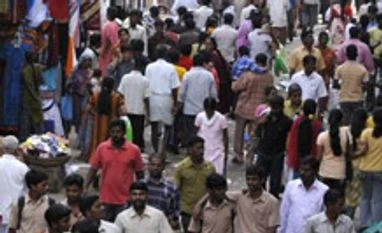 "Set 1971 census as 'criteria' for devolution of central resources: AP")


 Connect with us on WhatsApp