Sinha: India has game changing reforms
Press Trust of India New York Allaying concerns of investors over the pace of reforms in India, minister of state for finance Jayant Sinha on Tuesday said the government had implemented "game- changing" measures to transform India's economic fortunes and improve the business environment in the country.
Addressing students and faculty at an India Conference organised by Cornell University here, Sinha listed initiatives such as universal social security, 'Make in India' and agriculture credit taken by the Narendra Modi government to boost productivity and economic growth in the country.
"These measures are game-changing and are really going to transform India's economic fortunes," he said in his address via a video link.
Sinha said there was expectation that "big-bang" reforms would be put in place to fundamentally transform the economic landscape and there is disappointment in some quarters over the speed of such reforms.
"I reassure business people, investors and Indians, we have probably done more and more quickly than any other government, including the government that brought in the 1991 liberalisation," he said. Sinha said that to ensure universal social security, the government had initiated the Jan Dhan Yojna, which, over a period, will include benefits like health insurance.
In agriculture, initiatives like the irrigation soil health card, agricultural credit and crop insurance are being put in place to make India's agriculture more productive.
He also listed the Make in India, Skills India and Mudra schemes to highlight efforts by the government to improve manufacturing and give a boost to small entrepreneurs across the country.
When asked about India's low ranking in the ease of doing business index, Sinha said Prime Minister Modi is targeting that India should be in the top 50 and the government is "putting a lot of time and effort" and is "absolutely determined" to improve its ranking among nations in ease of doing business.
"These things take time to address and solve the problems associated with ease of doing business in India," he said, adding that the government is well on track to achieve the target set by Modi to see India among the top 50 destinations on ease of doing business.
He added that the overriding objective of the Modi government is to build India's productive capacity to ensure the country sustains an 8-10 per cent economic growth over the long term and lift millions out of poverty.
"Our overriding objective is to build India's productive capacity both as far as the hard assets and the soft assets are concerned.
"We recognise that unless we build India's productive capacity it will not be possible for us to sustain 8-10 per cent growth over the long term unless we have really addressed India's supply side and productive capacity," he said.

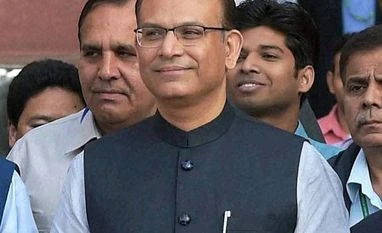 "Sinha: India has game changing reforms")


 Connect with us on WhatsApp